
In today’s home fragrance market, merely providing a scent is no longer sufficient. Consumers, especially the younger generation, are seeking "experiential products" that can carry emotion, express individuality, and be shared on social media. The popularity of crystal candles is a perfect testament to this market shift. It is not a fleeting trend but the inevitable result of precisely meeting multiple layers of deep-seated market demand. Understanding this demand is the starting point for any successful product development.
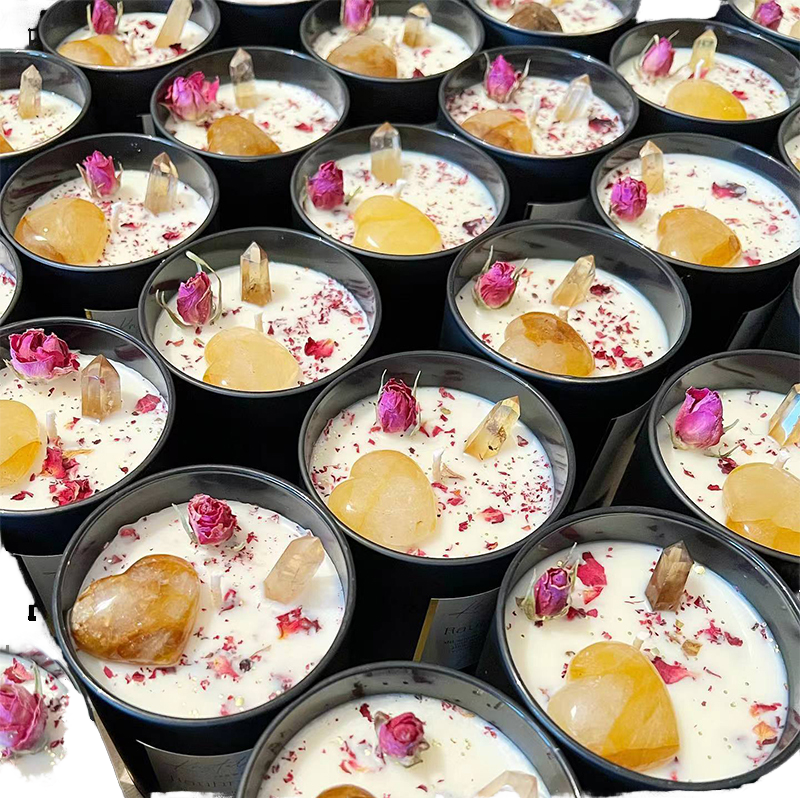
Chapter 1: Decoding Market Demand—Why Crystal Candles Resonate with Consumers
For a product to have "viral" potential, it must be rooted in genuine and compelling market demand. The success of crystal candles primarily addresses four core consumer desires:
1. Visual Priority and "Social Currency"
On visual-first platforms like Instagram and Xiaohongshu, a product’s "photogenic quality" has become a key purchasing driver. Crystal candles, with their translucent texture, interplay of light and shadow, and dynamic transformation while burning, naturally possess the ability to become premium visual content. Consumers are not just buying a scented product; they are purchasing a "prop" and "talking point" that can enhance their personal social image—a form of "social currency."
2. Emotional Value and the "Wellness Economy"
In the post-pandemic era, the "wellness economy" is booming. Crystals (whether natural stones or crafted glass) are commonly associated in the consumer’s mind with concepts like positive energy, purity, meditation, and spirituality. Combining crystals with aromatherapeutic candles creates an emotional value proposition where "1+1>2," fulfilling the strong consumer desire for emotional management, home ambiance creation, and self-care rituals.
3. The Pursuit of Personalization and Uniqueness
Modern consumers reject mass-produced, uniform products. Each hand-set crystal or naturally formed mineral inclusion carries subtle uniqueness. This "non-standard" characteristic caters to the psychology of expressing a distinctive self and owning something exclusive, thereby enhancing the product’s perceived value and collectible appeal.
4. The Expectation of Sustainability and Multi-Purpose Use
A growing number of consumers are concerned about a product’s lifecycle and environmental footprint. In a well-designed crystal candle, the crystal component can be removed, cleaned, and repurposed as a permanent home decor item (e.g., paperweight, ornament) or jewelry after the wax has burned. This "Product 2.0" thinking extends the product’s value chain, aligns with the mainstream trends of the circular economy and sustainable consumption, and becomes a crucial part of the brand story.
Chapter 2: From Demand to Product—Building the Four Core Dimensions of a "Hit"
Understanding the "why" leads to the "how." Translating market demand into a successful product requires systematically constructing the following four dimensions:
1. Conceptual Design: Telling a Credible Story
- Aesthetic Narrative: What visual language should your crystal candle convey? Nordic minimalism, mysticism, raw nature, or fantastical romance? This determines the crystal’s shape, color, and the wax’s translucency.
- Functional Narrative: Meaningfully pair the crystal with a fragrance. For example, amethyst with sleep-aiding lavender, or citrine with uplifting citrus notes, making the concept more persuasive.
- Value Narrative: Define your brand’s stance—is it about artisanal craftsmanship, eco-friendly materials, or the energy of natural stones? An authentic story is the bridge to emotional connection.
2. Technical Execution: Balancing Art and Science
- Safety First: This is the non-negotiable prerequisite for all design. Rigorous burn testing is mandatory to ensure the crystal material (e.g., glass, natural stone) remains stable at high temperatures, does not crack, and its placement is absolutely clear of the wick’s flame path. Specific molds and pouring techniques are often required to secure the crystal.
- Burn Performance: Ensure the wax burns evenly, forming a full melt pool to avoid tunneling and product waste. The embedded crystal must not severely obstruct heat transfer.
- Scent Delivery: With translucent wax, the selection and ratio of fragrance oils need optimization to ensure effective scent throw without creating negative associations with chemicals, which might contradict the visual "purity."
3. Experience Design: Creating Shareable Moments
- Unboxing Ritual: Packaging is the first touchpoint of the experience. Design an unpacking process that feels like unveiling a treasure, reinforcing the product’s perceived value.
- Dynamic Transformation Points: This is key to generating shareable content. Whether it’s the crystal gradually being revealed as the wax melts ("the reveal") or the shifting play of candlelight refracted within the crystal, these moments must be intentionally designed and gently guided for users to discover and record.
- Extended Interaction Cues: Subtly suggest ideas for the crystal’s repurposing on the packaging or in instructions (e.g., "Once the wax is gone, your crystal will become a permanent fixture on your desk"), sparking user participation and creativity.
4. Seeding Virality: Embedding "Share Hooks" into the Product
- Visual Hook: Is the product itself highly photogenic, both at rest and while burning?
- Conversational Hook: Have you created an easily understood and shareable tagline or concept for the product? (e.g., #ABreathingCrystal #EnergyCandle)
- Participation Hook: Is there a mechanism to encourage users to showcase their usage scenarios or creative repurposing? UGC (User-Generated Content) is the most cost-effective and trustworthy form of传播.
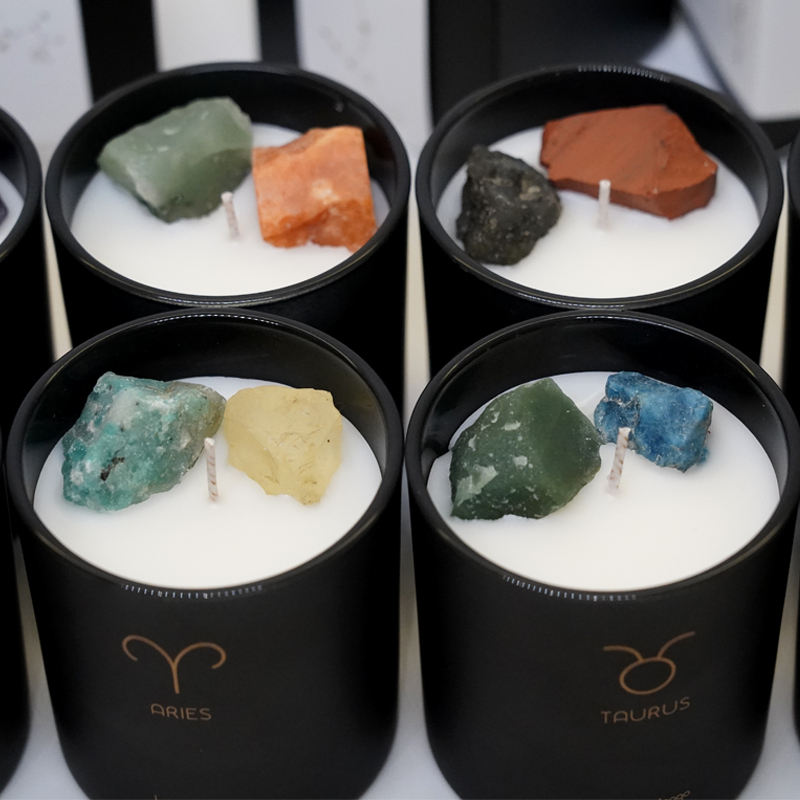
Chapter 3: Market Insights and Future Outlook
The crystal candle phenomenon reveals a paradigm shift in the development logic for future home fragrance products and beyond:
- From "Function Fulfillment" to "Meaning Creation": Products are no longer just utilities but vehicles for consumers to build their ideal life and express personal identity.
- From "Finished Product" to "Open Experience": Excellent product design leaves room for user participation and creation, allowing the product’s life to continue in the user’s hands.
- From "One-Way Broadcast" to "Social Co-Creation": Brands need to become initiators of conversation and organizers of community, co-authoring the product’s final narrative with consumers.
Conclusion
Crafting a promising crystal candle, or any product with "hit" potential, always begins with a deep understanding and respect for market demand. It is a journey that starts in the consumer’s mind, relies on masterful craftsmanship, and succeeds through emotional resonance. As manufacturers, our role is evolving from back-end producers to front-end user experience designers and social content co-creators. When your product inherently carries the "share" gene and accurately taps into the emotional and social needs of contemporary consumers, "viral传播" ceases to be a matter of偶然的幸运 and becomes a natural, achievable outcome.


 English
  Spanish
  Portuguese
  French
  Russian
  Polish
  Czech
Czech