
You walk out to your car on a hot summer afternoon. You open the door, and instead of a pleasant scent, you are greeted by a sticky, greasy puddle on your dashboard. The liquid air freshener you bought last week has leaked, leaving a stain that refuses to wipe clean.
This scenario is frustratingly common. And it is precisely why many drivers are making the switch to solid fragrance. But not all solid fragrances are created equal. As a manufacturer with over a decade of experience at ENO Aroma, I have seen the difference between a well-made solid fragrance and a poorly made one. This guide outlines four hard rules for choosing a solid car fragrance that actually works—and doesn’t turn your car into a mess.
The Problem with Liquid Fresheners in Cars
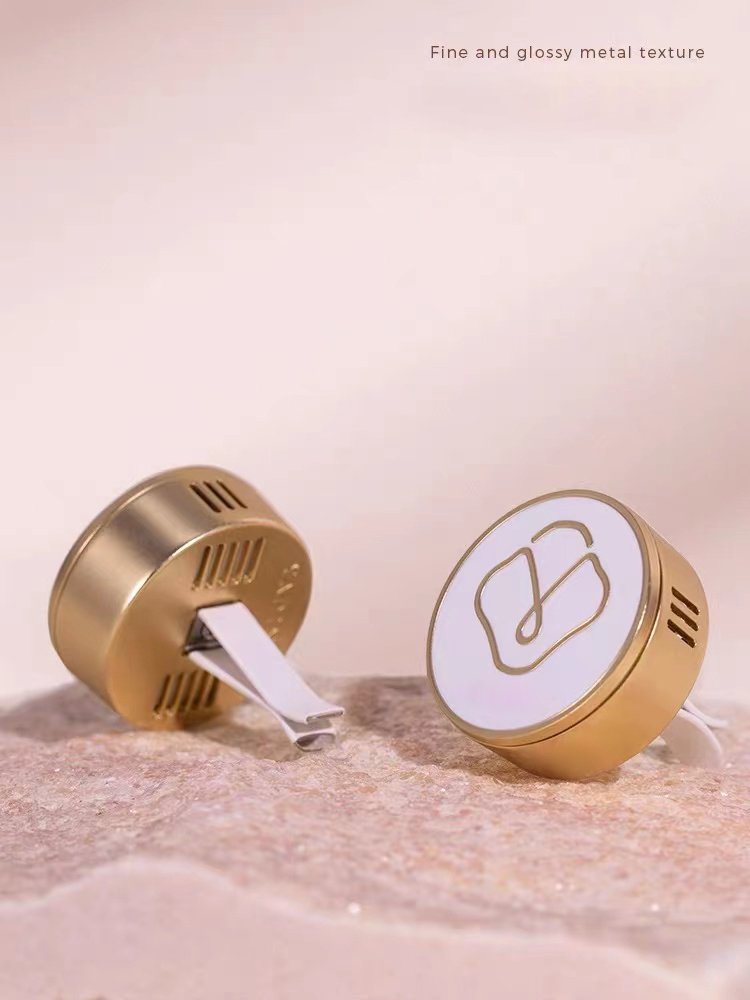
Liquid car fresheners have a fundamental flaw: they are liquid. In a moving vehicle, that means a risk of spills. In a parked car, that means temperature fluctuations can cause expansion, leakage, or even pressure buildup that pops caps open.
The enclosed environment of a car amplifies the problem. Unlike a living room, a car cabin has limited ventilation. Any leaked liquid can seep into dashboard gaps, stain leather or fabric seats, and even damage electronic components if it reaches vents or control panels.
The temperature factor: Summer temperatures inside parked cars can reach 40°C (104°F) or higher. Heat causes liquid expansion, and it also accelerates the degradation of synthetic fragrances, which can produce unpleasant odors or even harmful compounds.
Hard Rule #1: Choose Wax or Powder-Based Solids (Not Gel)
Not all "solid" fragrances are truly leak-proof. Some gel-based products, despite their semi-solid appearance, can still liquefy under extreme heat or when tipped over.
Qué hay que tener en cuenta
| Tipo de material | Leak Risk | Heat Stability | Typical Lifespan |
|---|---|---|---|
| Gel | Moderado | Low; can liquefy | 1-2 meses |
| Wax/Powder | Muy bajo | High; stable | 1-3 meses |
| Ceramic/Stone | Ninguno | Muy alta | 3+ months (with refills) |
Why it matters: Wax-based and powder-based solids have no free liquid to spill. They release fragrance through slow evaporation or sublimation, not wicking or dripping.
How to Verify
Check the product description for terms like:
- "Wax-based solid perfume"
- "Pressed powder fragrance"
- "Natural wax air freshener"
If the label says "gel" or "semi-solid" and the container does not have a secure sealing mechanism, treat it with caution. Look for products that specify "leak-proof" or "spill-proof" construction.
What to Avoid
- "Gel" products without a sealed container
- Products with a liquid layer visible inside
- Any product that requires "shaking" before use
Hard Rule #2: Secure Mounting Away from Airbags and Vents
Where you place your solid fragrance is just as important as what it is made of.
The "Safety Zone" Rule
| Ubicación | Nivel de riesgo | Recomendación |
|---|---|---|
| Dashboard near windshield | High (sun/heat) | Evite |
| Center console cup holder | Bajo | Bien |
| Air vent (properly clipped) | Bajo | Bien |
| Floor mat | Bajo | Acceptable |
| Near airbag deployment zone | Alta | Never place there |
Why This Matters
Placing any object in the deployment path of an airbag is dangerous. In a crash, the airbag deploys with enough force to turn a loose object into a projectile.
Correct placement:
- Cup holders (secure, won’t slide)
- Air vents with proper clips (also improves scent diffusion)
- Under-seat storage (if accessible)
Incorrect placement:
- On the dashboard directly in front of the passenger airbag
- On the dashboard center, unsecured
- Hanging from the rearview mirror (can obstruct vision and swing dangerously)
Hard Rule #3: Check the Solvent System (No Cheap Fillers)
The fragrance oil inside a solid is carried by a solvent or binder. Cheap manufacturers use low-quality carriers to cut costs. This affects both scent quality and safety.
Qué hay que tener en cuenta
| Tipo de ingrediente | Safety Rating | Scent Performance |
|---|---|---|
| Natural wax base | Muy bueno | Even, stable release |
| Mineral oil base | Moderado | May degrade in heat |
| Synthetic solvent (unlabeled) | Unknown/poor | Poor longevity, potential irritants |
Red flags: If the label lists only "fragrance" without specifying the carrier, or if it includes generic terms like "industrial fragrance oil," there is a good chance the formula prioritizes cost over quality.
Why the Carrier Matters
In a hot car, cheap solvents can evaporate quickly, leaving behind a concentrated—and sometimes irritating—fragrance residue. In some cases, they can even release volatile organic compounds (VOCs) that affect air quality.
Proven Safe Options
- Soy wax: Stable in warm temperatures, natural origin
- Cera de abejas: Very stable, natural, long-lasting
- Mineral oil (highly refined): Acceptable if properly formulated
Hard Rule #4: Check for IFRA Compliance and Transparency
The International Fragrance Association (IFRA) sets global safety standards for fragrance ingredients. If a manufacturer does not comply, that is a warning sign.
What to Request from Your Supplier
| Documentation | Por qué es importante |
|---|---|
| IFRA compliance certificate | Confirms ingredients are within safe usage limits |
| Full ingredient disclosure | Allows you to check for allergens or irritants |
| Stability test data | Confirms product performs in temperature extremes |
| Heavy metals test report | Ensures no contamination from raw materials |
The "Natural" Trap
Some products are marketed as "natural" or "plant-based" but still use low-quality carriers or synthetic fragrances. Being "natural" does not automatically mean safe.
Instead of trusting "natural": Verify with documentation. Ask for Certificates of Analysis (CoA) and safety data sheets. A reputable manufacturer will provide them without hesitation.
What a Transparent Label Should Show
- Wax base type (soy, beeswax, mineral)
- Fragrance source (IFRA-compliant, phthalate-free if claimed)
- Stability testing (temperature range)
- No hidden solvents or unlisted carriers
Manufacturing Perspective: What Makes a Good Solid Car Fragrance?
As a manufacturer, I evaluate solid car fragrances against four criteria:
1. Stability
A good solid car fragrance should remain stable across the entire automotive temperature range: from -10°C to +50°C. It should not melt, separate, or degrade.
Testing required: Accelerated aging at 50°C for 4 weeks.
2. Release Mechanism
Scent release should be gradual and predictable. A product that releases too much fragrance in the first week and nothing after is poorly designed.
Testing required: Weight loss tracking over 8 weeks.
3. Safety
All ingredients must be IFRA-compliant. No phthalates, no formaldehyde-releasing preservatives.
Testing required: IFRA certificate and, for premium products, third-party VOC testing.
4. Packaging
The container should be:
- Leak-proof (sealed, no free liquid)
- Heat-resistant (not warping at 50°C)
- Impact-resistant (not cracking if dropped)
Quick Reference: Solid vs. Liquid Car Fragrance
| Factor | Solid Fragrance | Liquid Fragrance |
|---|---|---|
| Leak risk | Muy bajo | Moderado a alto |
| Heat stability | Generally good | Poor; degrades in heat |
| Scent intensity | Subtle, steady | Strong initial burst, fades quickly |
| Vida útil | 1-3 meses | 1-2 meses |
| Seguridad | Low risk | Risk of spills and corrosion |
| Precio | $5-20 | $3-15 |
What ENO Aroma Offers
At ENO Aroma, we manufacture solid car fragrances that meet all four of these hard rules. Our products feature:
- Wax-based formulations: No free liquid; no leak risk
- IFRA-compliant fragrance oils: Safety verified
- Stability-tested: Proven performance from -10°C to +50°C
- Total transparencia en los ingredientes: We provide CoA and safety documentation
Para socios B2B, ofrecemos:
- Custom solid fragrance development (wax and powder bases)
- Private label solid car fragrance lines
- Stability testing documentation
- IFRA compliance certificates
Conclusión
A leaking liquid freshener on your dashboard is more than an inconvenience—it can damage your car’s interior and even pose a health risk if the leaked liquid contains harmful solvents.
Switching to a solid fragrance eliminates the leak problem entirely. But the quality of the solid matters. Choose wax or powder-based solids (not gel), secure them properly away from airbags, verify the solvent system, and demand IFRA compliance and ingredient transparency.
Follow these four hard rules, and you will never have to clean a sticky puddle off your dashboard again.
Ready to develop a solid car fragrance line that actually works? Contact ENO Aroma to discuss custom formulations and private label options.



 Spanish
  English
  Portuguese
  French
  Russian
  Polish
  Czech
Czech