
Allumer une bougie parfumée à la lavande ou diffuser quelques gouttes d'huile essentielle de bergamote peut souvent procurer un sentiment de calme indescriptible. Cette expérience n'est pas seulement d'ordre psychologique : elle repose en réalité sur un mécanisme neurobiologique rigoureux.
Chez ENO Aroma, forts de plus d'une décennie d'expertise dans la fabrication de parfums, nous sommes convaincus que la compréhension des mécanismes scientifiques qui sous-tendent les " odeurs " constitue le fondement de la création de produits d'aromathérapie véritablement efficaces et sûrs. Cet article vous fera découvrir l'univers scientifique de l'aromathérapie, en expliquant, au niveau moléculaire, comment les huiles essentielles agissent sur notre corps et notre esprit.
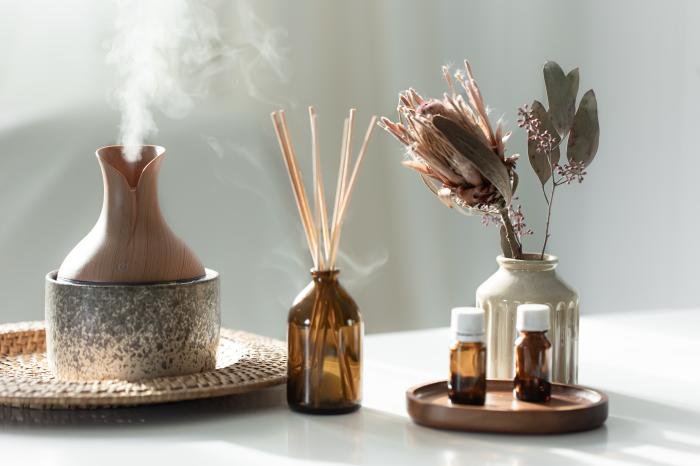
1. Le parcours d'une odeur : un chemin rapide du nez au cerveau
Contrairement à d'autres sens, comme l'ouïe ou la vue, l'odorat dispose d'une " voie rapide privilégiée " qui contourne les relais habituels du cerveau.
1.1 Un itinéraire direct qui contourne la station relais
Lorsque vous inhalez les molécules aromatiques libérées par les huiles essentielles, celles-ci se lient à des récepteurs situés sur l’épithélium olfactif, au fond de votre cavité nasale. Les signaux électriques déclenchés par cette liaison se propagent le long du nerf olfactif, en contournant le thalamus (qui traite habituellement les informations sensorielles), et parviennent directement au cerveau. système limbique. Le système limbique est la région centrale responsable des émotions, de la mémoire, de la réponse au stress et de la régulation hormonale.
1.2 Le " standard " émotionnel"
Les signaux olfactifs agissant directement sur l'amygdale (qui traite la peur, l'anxiété et le plaisir) et l'hippocampe (responsable de la mémoire), cela explique pourquoi une odeur particulière peut si rapidement faire resurgir un souvenir émotionnel très vif. L'aromathérapie agit par le biais de cette connexion neuronale directe pour réguler les états émotionnels en quelques instants, sans nécessiter d'analyse cognitive complexe.
2. La réaction de l'organisme : les effets neurochimiques des huiles essentielles
Si les huiles essentielles peuvent influencer l'humeur et les états physiologiques, c'est grâce aux molécules bioactives qu'elles contiennent, capables de moduler les neurotransmetteurs du cerveau.
2.1 Apaisement du système nerveux : le GABA et la " réaction de relaxation "
Le stress est souvent associé à une surexcitation du système nerveux. Certains composants des huiles essentielles renforcent l'activité du principal neurotransmetteur inhibiteur du cerveau —GABA.
- Mécanisme d'action: On pense que des composés tels que le linalol, présent dans l'huile de lavande, se lient aux récepteurs GABA, produisant ainsi un effet sédatif similaire à celui des médicaments anxiolytiques, ce qui permet d'apaiser les neurones hyperactifs et de favoriser la relaxation physique et mentale.
Cette " réaction de relaxation " du système nerveux entraîne à son tour des changements physiologiques tels qu'un ralentissement du rythme cardiaque, une baisse de la tension artérielle et une diminution de la fréquence respiratoire.
2.2 Régulation des hormones du stress : réduction du cortisol
L'un des indicateurs physiologiques les plus directs du stress est un taux élevé de cortisol. Des études ont montré que l'inhalation de certaines huiles essentielles, notamment celles de lavande et de bergamote, peut réduire efficacement les concentrations de cortisol tant dans la salive que dans le sang.
Des essais cliniques ont confirmé que les niveaux d'anxiété d'un groupe ayant bénéficié d'une intervention par aromathérapie étaient nettement inférieurs à ceux d'un groupe témoin, ce qui s'est traduit par une amélioration correspondante des marqueurs physiologiques tels que le cortisol. Ces résultats fournissent une base scientifique justifiant le recours à l'aromathérapie dans la prise en charge de l'anxiété et du stress cliniques.
3. Voies d'absorption des huiles essentielles
Au-delà de leur influence sur le cerveau par l'odorat, les molécules d'huiles essentielles peuvent pénétrer dans l'organisme par d'autres voies pour exercer des effets physiologiques plus larges.
3.1 La voie olfactive
Comme indiqué précédemment, il s'agit de la voie la plus directe et la plus courante. Les molécules aromatiques se lient aux récepteurs olfactifs, modulant ainsi les émotions et le système nerveux en quelques instants.
3.2 Absorption percutanée (à travers la peau)
Lors d'un massage ou d'un bain, les molécules d'huiles essentielles peuvent traverser la barrière cutanée.
- Effets locaux: Ils peuvent exercer des effets anti-inflammatoires, antimicrobiens et antioxydants au niveau du site d'application.
- Effets systémiques: Après avoir traversé l'épiderme et le derme, les molécules pénètrent dans les capillaires ou dans la circulation lymphatique, puis sont transportées par la circulation sanguine vers divers organes de l'organisme, avant d'être finalement métabolisées par le foie et les reins, puis éliminées.
3.3 Effets pharmacologiques
Une fois absorbés dans la circulation sanguine, les composants actifs des huiles essentielles peuvent agir sur l'ensemble de l'organisme. Des recherches scientifiques ont confirmé que certaines huiles essentielles possèdent :
- Propriétés anti-inflammatoires et antioxydantes: Ils pièrent les radicaux libres, inhibent la libération de cytokines pro-inflammatoires et réduisent le stress oxydatif dans l'organisme.
- Effets immunomodulateurs: Il a été démontré que certains composés terpéniques renforcent l'activité des cellules immunitaires (telles que les macrophages et les cellules NK), renforçant ainsi les défenses de l'organisme.
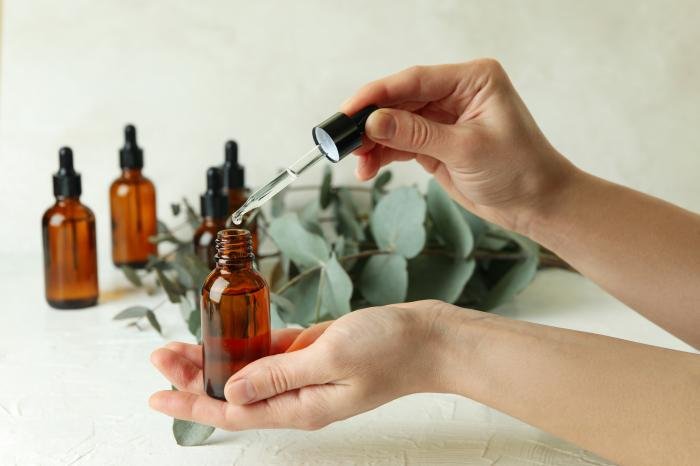
4. Zoom sur certaines huiles essentielles : des bienfaits scientifiquement prouvés
Les bienfaits des huiles essentielles ne reposent pas tous sur de simples " croyances populaires " ; les mécanismes d'action de nombreuses huiles courantes ont été validés par la science moderne.
| Huile essentielle | Principaux composants actifs | Bienfaits scientifiquement prouvés |
|---|---|---|
| Lavande vraie | Linalol, acétate de linalyle | Anxiolytique, sédatif et favorisant le sommeil, analgésique |
| Bergamote | Linalol, acétate de linalyle, bergaptène | Réduit le taux de cortisol, diminue le stress, améliore l'humeur |
| Menthe poivrée | Menthol | Améliore la vigilance, soulage les maux de tête, atténue les nausées, combat la fatigue |
| Romarin | 1,8-cinéol | Améliore les fonctions cognitives, renforce la mémoire, stimule la vigilance |
| Gingembre | Zingibérène, gingérol | Réduit les nausées et vomissements postopératoires ; possède des propriétés anti-inflammatoires |
5. Sécurité et qualité : laissez la science guider votre expérience
Comprendre les principes scientifiques qui sous-tendent les huiles essentielles nous permet également de les choisir et de les utiliser de manière plus rationnelle.
- La pureté est essentielle: La composition chimique d'une huile essentielle détermine directement son efficacité. Lors du choix des huiles, il est essentiel d'opter pour des produits 100% purs, naturels et sans additifs (sans phtalates ni parfums synthétiques).
- La dilution est nécessaire: Les huiles essentielles sont des extraits végétaux hautement concentrés. Lorsqu’on les applique sur la peau, elles doivent être diluées dans une huile de support (le rapport de dilution généralement recommandé est de 1 pour 5%). La lavande et l’arbre à thé font partie des rares huiles considérées comme sans danger pour une application directe sur la peau, sur de petites zones.
- La sécurité avant tout: De nombreuses huiles essentielles présentent des risques pour les femmes enceintes, les enfants et les animaux de compagnie (en particulier les chats). Par exemple, l'huile d'arbre à thé est hautement toxique pour les chiens et les chats. Avant d'utiliser une nouvelle huile essentielle, il est conseillé de réaliser un test cutané.
Conclusion
L’aromathérapie est bien plus qu’un simple plaisir sensoriel ; c’est une science rigoureuse qui s’appuie sur l’anatomie, les neurosciences et la biochimie. Du premier contact d’une molécule aromatique avec un récepteur dans la cavité nasale, au déclenchement d’une cascade de réactions dans le système limbique du cerveau, en passant par la modulation de l’état physiologique de l’organisme, il s’agit là d’un cadeau précieux que la nature offre à l’humanité.
À ENO Aroma, nous fondons notre travail sur ces principes scientifiques, en utilisant des matières premières de haute qualité et des formulations précises afin de créer des produits parfumés à la fois stimulants sur le plan émotionnel et d’une sécurité irréprochable. Nous espérons que ce guide vous aidera à mieux comprendre les bienfaits de l’aromathérapie et à l’intégrer de manière sûre et efficace dans votre vie quotidienne.
Envie de découvrir des produits d'aromathérapie véritablement scientifiques et efficaces ? N'hésitez pas à contacter ENO Aroma pour en savoir plus sur nos huiles essentielles de haute qualité et nos solutions de parfums sur mesure.





 French
  English
  Spanish
  Portuguese
  Russian
  Polish
  Czech
Czech