
At our factory, every candle undergoes rigorous Quality Control (QC) laboratory testing before it reaches your customers. This report details the standardized procedures we use to ensure consistent, safe, and high-performing candles by measuring three critical performance metrics: Burn Time, Melt Pool Depth, and Fragrance Release.
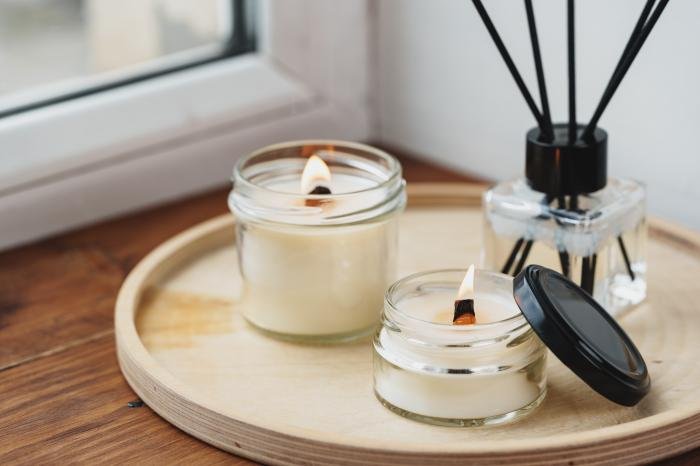
1. Burn Time Testing: Measuring Total Usable Life
Objective: To determine the total hours a candle burns under controlled conditions, ensuring it meets or exceeds the labeled lifespan.
Our Standardized Test Method (Based on ASTM F2417 & Industry Best Practices):
- Environment: Testing is conducted in a dedicated, draft-free climate-controlled chamber (typically 22°C ± 2°C, 50% ± 10% RH) to eliminate external variables.
- Equipment: Candles are placed on a level, heat-resistant surface. High-precision digital timers are used.
- Burn Cycle: We implement a structured "burn cycle" to simulate real-world use.
- Initial Burn: The first burn is crucial. We light the candle and burn it for a set period (e.g., 1 hour per inch of diameter) to establish a full melt pool.
- Cyclic Testing: The candle is then subjected to repeated cycles (e.g., 4-hour burns followed by complete cooling and trimming of the wick to 6mm before re-lighting). This tests performance over multiple uses.
- Measurement: Total burn time is recorded from the first light until the wick can no longer support a flame or ½ inch of unmelted wax remains at the container edge (for container candles).
Why This Matters for Your Business: Accurate burn time labeling builds customer trust and reduces returns. Our testing ensures your product claims are reliable, directly impacting customer satisfaction and repeat purchases.
2. Melt Pool Depth & Diameter Analysis: Ensuring Safety & Full Consumption
Objective: To verify that the candle burns evenly and safely without generating excessive heat that could overheat the container (a safety hazard) or leave significant wax on the sides ("tunneling").
Our Laboratory Process:
- Real-Time Monitoring: Using calibrated thermal imaging cameras and laser measuring tools, we monitor the formation of the melt pool (the liquid wax around the flame).
- Key Checkpoints (at 1-hour intervals during test burns):
- Depth: We measure the depth of the liquid wax pool. A properly formulated candle will reach its optimal depth (typically ½ inch or less for most containers) and stabilize, preventing the container from becoming dangerously hot.
- Diameter: We ensure the melt pool extends to within ¼ – ½ inch of the container wall by the end of the recommended burn period. This indicates full wax consumption, maximizing value and preventing wasteful tunneling.
- Safety Threshold: Container surface temperature is continuously logged to ensure it remains within safe limits (well below the material’s heat tolerance).
Why This Matters for Your Business: Consistent melt pool performance is non-negotiable for product safety and quality perception. It prevents customer complaints about wasted wax, sooty jars, or, in extreme cases, container damage.

3. Fragrance Release (Cold & Hot Throw) Evaluation: Quantifying the Scent Experience
Objective: To objectively and subjectively assess the strength and quality of the fragrance when the candle is unlit ("Cold Throw") and when burning ("Hot Throw").
Our Dual-Method QC Approach:
A. Cold Throw Assessment
- Procedure: A panel of trained evaluators sniffs the unlit candle in a clean, odor-neutral room at standardized distances and times after curing.
- Grading: The fragrance is scored on intensity, clarity (true to the intended scent profile), and appeal.
B. Hot Throw Assessment
- Environment: The candle is burned in a sealed, neutral-smelling testing room of standard volume (e.g., 10′ x 10′ x 8′).
- Protocol: After a specified "warm-up" burn time (usually 30-60 minutes), evaluators enter the room at set intervals.
- Measurement:
- Subjective Panel: Evaluators grade the fragrance intensity, diffusion (how well it fills the room), and scent fidelity on a standardized scale.
- Objective Data (where applicable): We use specialized equipment like gas chromatography-mass spectrometry (GC-MS) in R&D to analyze fragrance compound release and consistency between batches, ensuring the scent oil performs as formulated.
Why This Matters for Your Business: Fragrance performance is the primary driver of customer delight and repurchase decisions. Our systematic evaluation guarantees that the scent experience—from the first sniff in the box to the ambiance it creates while burning—is powerful, consistent, and true to your branding.
Our QC Commitment to You
Every batch of candles we produce is backed by data from these laboratory tests. Our detailed QC reports provide you with:
- Batch-Specific Performance Data
- Conformance Certification against our stringent standards (and your specifications)
- Traceability for raw materials and production runs
By investing in scientific, repeatable QC processes, we ensure that the candles you receive are not only beautiful but also perform predictably, safely, and delightfully for the end consumer.
For a sample of our detailed QC Lab Report or to discuss custom testing parameters for your product line, please contact our technical sales team.


 French
  English
  Spanish
  Portuguese
  Russian
  Polish
  Czech
Czech