
Reed diffusers are a type of indoor fragrance product that provides continuous scent to a space without the need for an open flame or electricity. With their elegant appearance, safety, and long-lasting performance, they have become an ideal choice for hotels, homes, offices, and both public and private spaces. At ENO Aroma, with over a decade of experience in fragrance manufacturing, we have developed a deep understanding of the seemingly simple yet sophisticated scientific principles behind reed diffusers.
This article provides a professional manufacturer’s perspective on the core working principles of reed diffusers, the key factors affecting scent diffusion performance, and how scientifically formulated designs and proper maintenance can achieve the optimal fragrance experience.
1. Basic Components of a Reed Diffuser
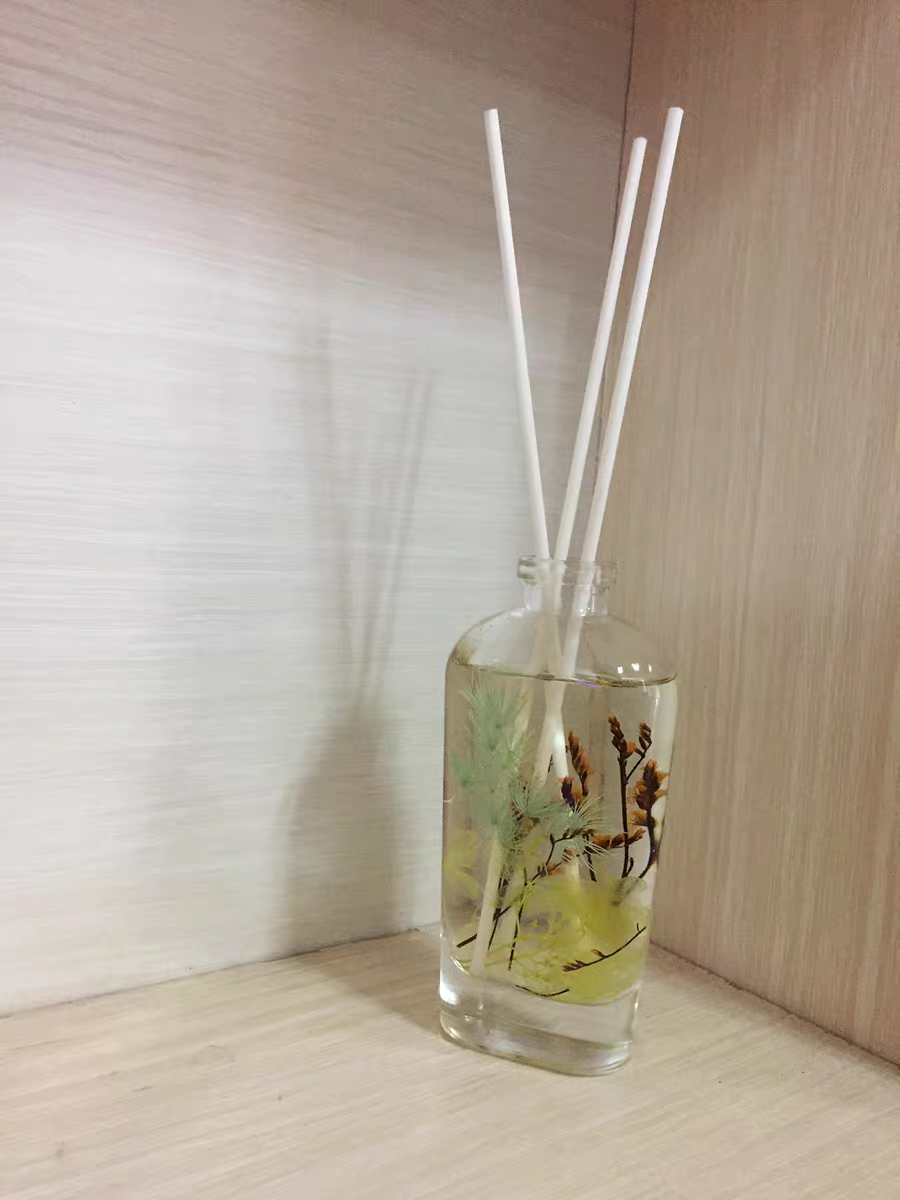
A reed diffuser system consists of three core components:
| Component | Material/Composition | Function |
|---|---|---|
| Vessel | Glass, ceramic, or plastic bottle | Holds the fragrance oil; typically uses heat-resistant, shatter-resistant quality glass |
| Reeds | Rattan, reed, willow, or natural fibers | Absorbs the oil through capillary action and releases it into the air |
| Fragrance Oil | Fragrance + volatile solvent (diluent) | Source of the scent; determines fragrance type and diffusion characteristics |
Reeds are typically made from natural, porous plant materials, with rattan being the preferred choice due to its unique fibrous structure that provides optimal absorption and release properties. High-quality reeds contain millions of microscopic capillary channels that efficiently transport liquid from the bottom of the vessel to the tips exposed to the air.
2. Core Working Principles: Capillary Action and Evaporation
The operation of a reed diffuser relies on two interconnected physical processes: capillary action and natural evaporation.
2.1 Capillary Action: Making the Oil "Climb Up"
Capillary action refers to the phenomenon where liquid flows upward through narrow channels against gravity. Inside the reeds, there are numerous tiny, interconnected pores that function like countless small straws.
When the reed is inserted into the fragrance oil, the adhesive force between the liquid and the inner walls of the reed exceeds the cohesive force between the liquid molecules, causing the liquid to be "pulled" into these tiny channels and transported upward along the reed. This process is continuous—as long as the bottom of the reed remains immersed in the oil, evaporation at the top will automatically draw up replacement liquid from the bottom.
Professional Reference Data: Natural rattan reeds have a capillary absorption rate of approximately 3.2 × 10⁻² mL/hour, typically requiring 36-48 hours to reach complete saturation. This explains why newly opened reed diffusers need some time to achieve optimal scent diffusion.
2.2 Natural Evaporation: Releasing Scent into the Air
Once the fragrance oil reaches the portion of the reed exposed to the air via capillary action, the volatile components within the oil begin to diffuse into the surrounding air—a process known as evaporation or diffusion.
The evaporation rate depends on several factors:
- Surface area of the reeds: More reeds and thicker diameters mean greater surface area exposed to the air, resulting in stronger scent release
- Ambient temperature: Higher temperatures increase molecular motion, accelerating evaporation
- Air circulation: Moderate airflow removes the saturated vapor layer around the reeds, enhancing evaporation
2.3 Passive Diffusion: Continuous and Gentle
Unlike active fragrance devices that use motors or ultrasonic technology, reed diffusers operate as passive diffusion systems. They do not rely on external energy sources, functioning solely through natural physical processes. This means:
- Scent release is continuous: Once the reeds are saturated with oil, fragrance will be released continuously as long as the liquid supply lasts
- Scent intensity is gradual: Rather than an instant burst like a spray, the fragrance gently permeates the space, creating a background ambiance
- Operating costs are minimal: No electricity required, no mechanical components, virtually zero maintenance
3. The Science of Fragrance Oil Formulation
The "lifeblood" of a reed diffuser—the fragrance oil—is not a single component but a complex system carefully formulated from fragrance compounds and volatile solvents (diluents) .
3.1 Solvent Selection: Determining the Evaporation Rate
The solvent is the main component of the fragrance oil, and its properties directly affect the product’s diffusion performance and lifespan. Common solvent types include:
| Solvent Type | Representative Components | Evaporation Characteristics | Application |
|---|---|---|---|
| Alcohols | Ethanol, Propylene Glycol | Fast evaporation, strong initial scent | Products seeking immediate fragrance impact |
| Ethers | DPM, TPM | Moderate evaporation, steady release | Standard home fragrance |
| Hydrocarbons | Isododecane | Slow evaporation, long-lasting | Premium, extended-life products |
High-quality products typically use environmentally friendly, slow-evaporating solvent systems to achieve a balance between scent intensity and product lifespan. Depending on the solvent system, reed diffusers can be classified as oil-based or water-based, with water-based products having specific requirements for reed materials.
3.2 Fragrance Concentration and Compatibility
The fragrance compound is the source of the scent, and its concentration directly affects scent intensity:
- Commercial formulations: Fragrance concentration typically ranges from 10-25%, depending on product positioning
- Natural essential oil formulations: Pure essential oils evaporate relatively quickly and typically require appropriate solvents and diluents for optimal performance
It is worth noting that pure essential oils are not the optimal choice for reed diffusers. Pure oils have higher viscosity and evaporation characteristics that do not perfectly match the capillary channels of reeds, which may result in slow absorption or uneven scent release. Professional manufacturers typically add carrier oils (such as fractionated coconut oil, sweet almond oil) to adjust viscosity and evaporation rate, achieving optimal diffusion performance.
3.3 Performance Data Comparison
According to third-party testing data, the performance characteristics of different fragrance oil types are as follows:
| Parameter | Pure Essential Oil | Synthetic Fragrance Oil | Blended Formulation |
|---|---|---|---|
| Viscosity (cP) | 28-35 | 18-22 | 24-28 |
| Evaporation Rate (mL/day) | 0.8 | 1.2 | 1.0 |
| Odor Threshold (ppm) | 0.3 | 0.8 | 0.5 |
Blended formulations achieve a good balance between scent intensity and product lifespan, which is why they represent the mainstream technical approach used in current reed diffuser products.
4. Key Factors Affecting Scent Diffusion Performance
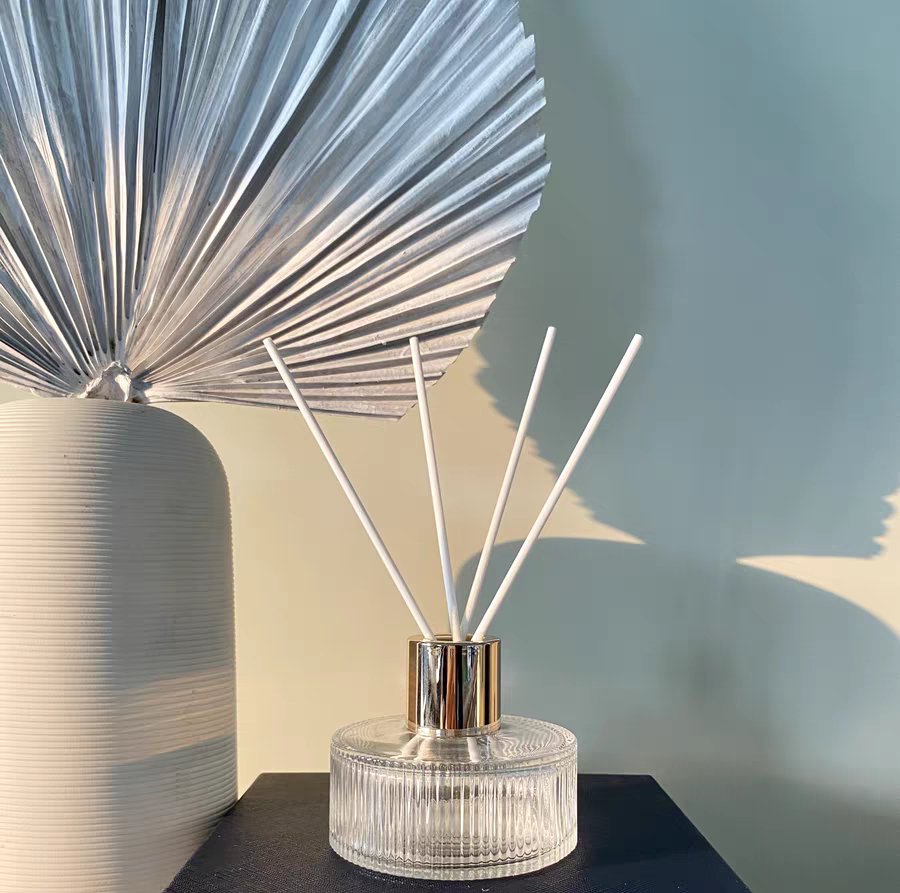
Even the highest quality reed diffuser will not perform optimally if used incorrectly. The following factors directly affect scent intensity and longevity:
4.1 Number of Reeds
The number of reeds is the most direct way to control scent intensity:
- More reeds = greater evaporation surface area = stronger scent release = faster oil consumption
- Fewer reeds = milder scent = longer product lifespan
Practical Recommendations:
- Small spaces (bathrooms, walk-in closets): 3-4 reeds
- Medium spaces (bedrooms, studies): 5-6 reeds
- Large spaces (living rooms, open areas): 7-8 reeds
4.2 Ambient Temperature and Airflow
Temperature and air movement have significant effects on the evaporation rate:
| Environmental Condition | Effect on Scent Diffusion | Effect on Product Lifespan |
|---|---|---|
| Increased temperature | Enhanced scent | Shortened lifespan |
| Moderate airflow (doorways, hallways) | Wider scent distribution | Slightly shortened lifespan |
| Low temperature / no airflow | Reduced scent | Extended lifespan |
| High humidity (bathrooms) | Gentler scent | Extended lifespan |
Professional Tip: Avoid placing reed diffusers near heating vents, direct sunlight, or appliance exhaust areas. High temperatures can accelerate oxidation and degradation of fragrance components, leading to rapid oil consumption.
4.3 Reed Maintenance and Replacement
Over time, reeds become saturated and may have their micro-pores blocked by dust, reducing capillary efficiency.
Maintenance Recommendations:
- Initial use: Soak the reeds for 30 minutes, then flip them once to ensure thorough saturation
- Regular flipping: Flip the reeds weekly—this allows the saturated ends to re-immerse while the dry ends become exposed, instantly enhancing scent intensity
- Regular replacement: Replace reeds every 2-3 months to maintain optimal capillary efficiency
- Clean the bottle neck: Wipe the bottle opening monthly to prevent oil residue buildup that could hinder evaporation
4.4 Oil Level
When the oil level drops below the bottom of the reeds, capillary action ceases and scent release stops. It is recommended to refill or replace the oil when the level falls below one-third of the bottle height.
5. Quality and Safety Standards
As a professional fragrance manufacturer, ENO Aroma understands the critical importance of product quality and safety. Reed diffuser products must comply with various domestic and international standards:
5.1 Chinese Standards
Reed diffuser products sold in the Chinese market must comply with GB/T 35953-2023 "Fragrances for Consumer Products" . Key requirements include:
| Test Item | Requirement |
|---|---|
| Fragrance Stability | After 30 days at 40°C, scent intensity reduction ≤ 20% |
| Lead Content | ≤ 1 mg/kg |
| Arsenic Content | ≤ 0.5 mg/kg |
| Allergen Labeling | If containing specific allergenic fragrances, must be labeled on packaging |
5.2 International Standards
- IFRA Standards: Comprehensive safety standards for fragrance ingredient use established by the International Fragrance Association, with specific concentration limits for various fragrance components
- REACH and CLP Regulations: EU requirements for registration, evaluation, authorization, and restriction of chemical mixtures
- CARB Certification: California Air Resources Board requirements for volatile organic compound (VOC) emissions
5.3 Safety Precautions
Although reed diffusers do not involve open flames, the following safety precautions should still be observed:
- The fragrance oil is flammable; keep away from open flames and heat sources
- Avoid direct skin contact with the oil; if contact occurs, wash promptly
- Place out of reach of children and pets
- If tipped over, wipe up the spill promptly
6. Conclusion: The Science Behind Simplicity
A reed diffuser may appear simple—a bottle, a few reeds, a bottle of oil—but behind it lies the collective wisdom of materials science, fluid mechanics, and fine chemical engineering. From the porous structure design of the reeds, to the solvent system formulation of the fragrance oil, to the precise control of evaporation rates, every detail affects the final user experience.
At ENO Aroma, with over a decade of fragrance manufacturing expertise, we rigorously manage every technical aspect of our reed diffuser products. From the selection of premium rattan reeds, to the choice of environmentally friendly solvents, to fragrance formulations that meet international standards, we are committed to providing our B2B partners with reed diffuser products that deliver stable performance, reliable safety, and long-lasting fragrance.
Interested in OEM/ODM customization for reed diffuser products? Contact ENO Aroma, and let our professional manufacturing capabilities help you create a uniquely competitive fragrance product line.


 English
  Spanish
  Portuguese
  French
  Russian
  Polish
  Czech
Czech