
A reed diffuser appears deceptively simple: a bottle, some oil, and a bundle of reeds. Yet beneath this simplicity lies a complex interplay of materials science, fluid dynamics, and chemistry. The wrong combination of reeds and bottle can transform a premium fragrance into a disappointing product that either emits no scent at all or depletes itself within weeks.
At ENO Aroma, with over a decade of manufacturing expertise, we understand that the vessel is not merely a container—it is an active component of the diffusion system. This article provides a comprehensive guide to selecting the right reeds and bottle materials for reed diffusers, drawing on industry research, material science principles, and practical manufacturing experience.
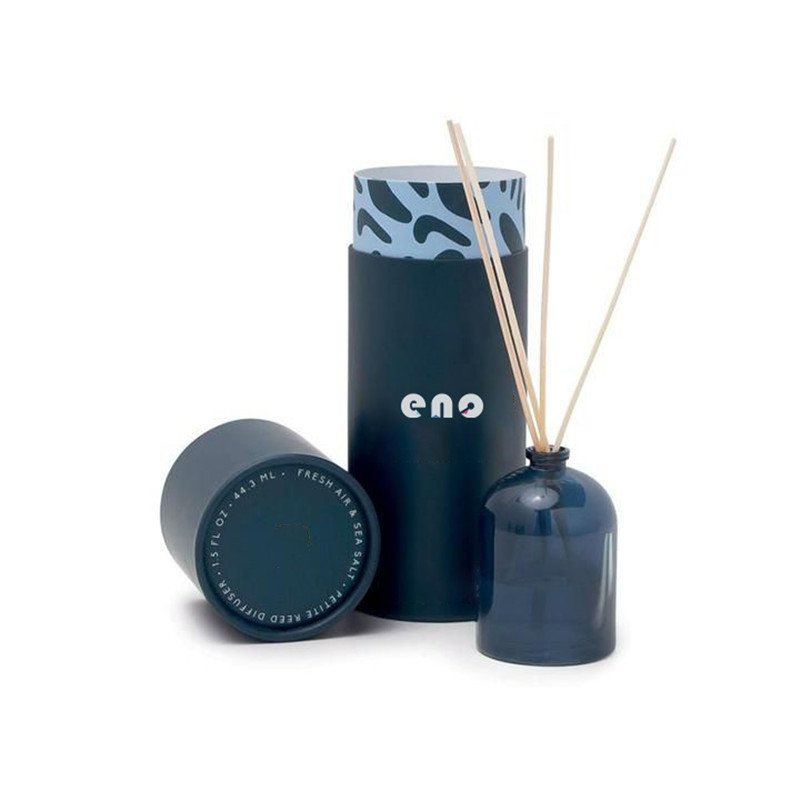
1. Understanding the Diffusion System
Before examining individual components, it is essential to understand how the entire system works together.
1.1 The Three Pillars of Diffusion Performance
| Komponent | Funkcja | Failure Mode |
|---|---|---|
| Formuła olejku zapachowego | Provides scent molecules | Poor evaporation, separation |
| Trzciny | Transport oil via capillary action; provide evaporation surface | Clogging, insufficient wicking |
| Bottle | Holds oil; regulates air exchange | Restricted airflow, material incompatibility |
All three must be optimized together. A premium oil in poor reeds will underperform. Excellent reeds in an incompatible bottle will fail. The system is only as strong as its weakest component.
1.2 How the System Works
- Oil is drawn up the reed’s micro-channels via capillary action
- Oil reaches the exposed portion of the reed above the bottle neck
- Volatile fragrance compounds evaporate from the reed surface into the air
- The concentration gradient drives continuous flow from bottle to reed tip
Any interruption in this chain—clogged channels, restricted airflow, or incompatible materials—breaks the system.
2. Reed Selection: The Heart of the Diffuser
Reeds are not passive wicks. Their physical structure determines how efficiently they transport oil and how effectively they release scent.
2.1 Natural Rattan: The Industry Standard
Rattan (from rattan palms) remains the gold standard for reed diffusers. Its natural structure is uniquely suited to the application.
Why Rattan Works:
- Micro-porous structure: Rattan contains thousands of microscopic channels that naturally draw liquid upward
- Optimal pore size: The channel diameter (typically 10-50 microns) creates the ideal balance between flow rate and capillary pressure
- Rough surface texture: Increases surface area for evaporation
- Chemical compatibility: Inert to most fragrance oil components
Performance Data:
- Absorption rate: approximately 3.2 × 10⁻² mL per hour per reed
- Saturation time: 24-48 hours for complete saturation
- Effective lifespan: 2-4 months before pore clogging degrades performance
2.2 Natural Rattan Grades
Not all rattan is equal. Manufacturers typically offer several grades:
| Grade | Charakterystyka | Najlepsza aplikacja |
|---|---|---|
| Premium | Tight, uniform pores; minimal surface imperfections | Luxury fragrances, high-viscosity oils |
| Standard | Good pore structure; some natural variation | Most commercial applications |
| Economy | Wider pores; more surface irregularities | Value products, thinner oils |
Na co zwrócić uwagę:
- Visible pore structure (not painted or sealed)
- Rough, matte texture (not smooth or glossy)
- Natural color variation (bleaching may damage pore structure)
- Consistent diameter along the length
2.3 Alternative Reed Materials
| Materiał | Zalety | Wady | Verdict |
|---|---|---|---|
| Birch Wood | Aesthetic appeal, rigid | Lower porosity, slower wicking | Limited use |
| Bamboo | Sustainable, attractive | Pores too large; oil drips | Niezalecane |
| Fiber Composite | Stała wydajność | Higher cost, less natural | Emerging option |
| Synthetic Fibers | Very consistent, durable | Less natural appeal | Niche applications |
Zalecenie: For reliable, consistent performance, natural rattan remains the best choice. Alternative materials should be thoroughly tested before production.
2.4 Reed Diameter and Length
Standard reed dimensions:
| Parameter | Typowy zakres | Skutek |
|---|---|---|
| Diameter | 2-4 mm | Thicker = more oil capacity but slower wicking |
| Length | 25-30 cm (10-12 inches) | Longer = more evaporation surface |
| Reed count | 6-10 per diffuser | More reeds = stronger scent, faster depletion |
Guidelines:
- Smaller spaces: 3-4 reeds, 2mm diameter
- Medium spaces: 5-7 reeds, 3mm diameter
- Large spaces: 8-10 reeds, 4mm diameter
2.5 Reed Treatment and Coatings
Untreated rattan is generally preferred. Some suppliers offer treated reeds:
| Treatment | Cel | Trade-offs |
|---|---|---|
| Bleaching | Uniform appearance | May damage pore structure |
| Sealing | Prevents staining | Blocks capillary action—avoid! |
| Anti-microbial | Extends life | Possible formulation interaction |
| Priming | Faster initial wicking | Adds cost |
Critical Warning: Never use painted, lacquered, or sealed reeds. Any coating that fills the surface pores will destroy capillary action. The reed must be bare, porous rattan.
2.6 When to Replace Reeds
Reeds have a finite lifespan. Replace when:
- Flipping no longer restores scent intensity
- Reeds appear visibly clogged with dust or residue
- 2-3 months of continuous use have passed
- Oil consumption slows significantly
3. Bottle Selection: More Than a Container
The bottle is not passive. Its design actively influences diffusion performance through three mechanisms: neck opening, headspaceoraz material compatibility.
3.1 Neck Opening Diameter
The most critical bottle dimension for diffusion performance is the neck opening.
| Neck Diameter | Air Exchange | Evaporation Rate | Najlepsze dla |
|---|---|---|---|
| Narrow (35mm) | Wysoki | Rapid depletion, potential oversaturation | Commercial, high-traffic areas |
The Science: Air exchange at the bottle opening affects the concentration gradient that drives capillary flow. A narrow neck restricts air circulation above the oil surface, slowing evaporation from the reed tips. A wide neck allows more air movement, accelerating both evaporation and oil consumption.
Zalecenie: Standard 20-25mm neck opening provides the best balance for most applications.
3.2 Headspace (Air Volume Above Oil)
Headspace refers to the volume of air between the oil surface and the bottle neck.
| Headspace | Skutek |
|---|---|
| Minimalny | Oil may contact reeds at insertion point; potential clogging |
| Moderate (1-2cm) | Ideal—allows air circulation without excess evaporation |
| Excessive (>3cm) | May slow initial wicking; requires longer reeds |
Design Principle: Fill bottles to leave approximately 1-2cm of headspace. This provides adequate air circulation without compromising the oil-reach interface.
3.3 Glass: The Preferred Material
Glass is the industry standard for reed diffuser bottles, and for good reason.
| Property | Glass Performance |
|---|---|
| Chemical inertness | Does not react with fragrance oils |
| Non-porous | No absorption or leakage |
| Transparency | Allows oil level visibility |
| Możliwość recyklingu | Infinitely recyclable |
| Aesthetic range | Clear, frosted, colored, textured |
Glass Types:
| Typ | Charakterystyka | Najlepsze dla |
|---|---|---|
| Soda-lime | Standard, cost-effective | Most applications |
| Borosilicate | Higher chemical resistance, thermal stability | Premium, reactive oils |
| Recycled glass | Sustainable, slight variations | Eco-positioned brands |
3.4 Glass Treatments and Finishes
| Finish | Effect on Performance | Zalecenie |
|---|---|---|
| Clear | No effect | Standard choice |
| Frosted | No effect (surface treatment only) | Aesthetic option |
| Colored glass | May block UV (beneficial) | Good for light-sensitive oils |
| Coated | Potential interaction | Test thoroughly |
Uwaga: UV light degrades many fragrance components. Amber or cobalt blue glass offers natural UV protection without chemical coatings.
3.5 Plastic Bottles: Proceed with Caution
Plastic bottles are generally not recommended for reed diffusers.
Problems with Plastic:
- Permeation: Some fragrance components can migrate through plastic walls
- Interakcja chemiczna: Plasticizers may leach into oil; oil components may dissolve plastic
- UV degradation: Most plastics offer no UV protection
- Perception: Plastic feels less premium
When Plastic Might Work:
- Very short product lifespan (disposable, single-use)
- Extremely low-cost positioning
- Specific plastic types tested for compatibility (PET, HDPE)
Wymagane testy: Any plastic bottle must undergo compatibility testing with the specific fragrance oil formulation for at least 4 weeks at 40°C.
3.6 Ceramic and Porcelain
Ceramic bottles offer aesthetic differentiation but come with considerations:
| Aspekt | Rozważania |
|---|---|
| Glaze integrity | Must be fully sealed; unglazed interiors can absorb oil |
| Waga | Heavier than glass; shipping cost implications |
| Opacity | Cannot see oil level; may require window or dipstick |
| Personalizacja | High potential for unique shapes and finishes |
Zalecenie: Ceramic works well for premium, high-end positioning but requires careful quality control to ensure glaze integrity.
3.7 Bottle Shape and Stability
Beyond material, shape matters:
Stability Requirements:
- Wide enough base to prevent tipping
- Low center of gravity (height should not exceed width by more than 3:1 ratio)
- Flat, level bottom surface
Aesthetic Considerations:
- Square, round, hexagonal, or custom shapes available
- Consider how shape affects grip and pouring

4. The Reed-Bottle Interface
The point where reeds meet the bottle is critical. Poor design here can ruin performance.
4.1 Neck Fit
Reeds should fit snugly but not tightly in the bottle neck.
| Fit | Problem |
|---|---|
| Too loose | Reeds fall in; excessive air exchange; rapid depletion |
| Too tight | Restricted airflow; difficult to remove; potential bottle cracking |
| Just right | Gentle friction holds reeds in place while allowing air circulation |
Specification: Neck opening should be approximately 1-2mm wider than the combined diameter of the reed bundle.
4.2 Reed Collars and Spacers
Many diffusers include a collar or spacer that:
- Keeps reeds separated (prevents "clumping")
- Allows air circulation between reeds
- Prevents reeds from falling into the bottle
| Collar Type | Zalety | Wady |
|---|---|---|
| Plastic ring | Inexpensive, effective | Less premium feel |
| Metal collar | Premium aesthetic | Can corrode with some oils |
| Rubber grommet | Good seal, adjustable | May degrade over time |
| Cork | Natural, attractive | Can absorb oil, swell |
4.3 Reed Immersion Depth
Reeds should be immersed approximately 1/3 to 1/2 of their total length.
| Immersion Depth | Skutek |
|---|---|
| Too shallow | Insufficient wicking; weak scent |
| Optymalny | Good capillary action; balanced evaporation |
| Too deep | Excess oil in reeds; potential dripping |
Practical Tip: Choose bottle height so that when reeds are inserted, 5-8cm (2-3 inches) of reed extends above the bottle neck.
5. Material Compatibility Testing
Before committing to production, rigorous compatibility testing is essential.
5.1 Test Protocol
| Test | Czas trwania | Warunki | Kryteria akceptacji |
|---|---|---|---|
| Reed-oil compatibility | 4 tygodnie | Temperatura pokojowa | No swelling, no degradation, consistent wicking |
| Bottle-oil compatibility | 4 tygodnie | 40°C (accelerated) | No cracking, no leaching, no odor absorption |
| Full system test | 8-12 tygodni | Temperatura pokojowa | Consistent performance, no failures |
| Transport simulation | 2 tygodnie | Vibration, temperature cycling | No leaks, no damage |
5.2 What to Check
For Reeds:
- Swelling or softening
- Color change (oil staining is normal; structural change is not)
- Wicking rate consistency over time
- Surface residue or crystallization
For Bottles:
- Cracking or stress marks
- Leaching (plasticizers or colorants migrating into oil)
- Odor absorption (bottle should not retain scent after cleaning)
- Seal integrity (cap should not loosen)
For the System:
- Scent throw consistency
- Oil depletion rate
- Reed clogging timeline
5.3 Common Failure Modes
| Failure | Cause | Rozwiązanie |
|---|---|---|
| No scent after 2 weeks | Reeds clogged; oil too viscous | Change reed type; adjust formulation |
| Oil turns cloudy | Incompatibility between oil and bottle | Change bottle material |
| Cracking bottle | Thermal stress; chemical incompatibility | Use borosilicate glass; test formulation |
| Leaking cap | Poor seal design; material degradation | Upgrade cap; change gasket material |
| Rapid depletion | Neck too wide; too many reeds | Adjust design parameters |
6. Sustainability Considerations
Increasingly, B2B partners seek sustainable options for both reeds and bottles.
6.1 Sustainable Reeds
| Option | Sustainability Credential | Wpływ na wydajność |
|---|---|---|
| FSC-certified rattan | Responsibly harvested forests | Same as standard rattan |
| Reclaimed rattan | Upcycled from furniture industry | Slightly more variable |
| Bamboo (with caution) | Fast-growing, renewable | Lower performance; test thoroughly |
| Hemp fibers | Odnawialne, ulegające biodegradacji | Emerging technology; limited data |
6.2 Sustainable Bottles
| Option | Sustainability Credential | Rozważania |
|---|---|---|
| Recycled glass | 30-100% post-consumer content | Slight color variations possible |
| Lightweight glass | Reduced carbon footprint | More fragile; adjust packaging |
| Refillable systems | Reuse bottle multiple times | Requires compatible cap design |
| Biodegradable plastics | Emerging option | Limited compatibility data |
6.3 Refill Systems
Refillable diffuser systems reduce waste:
- Design for refill: Wide neck for easy pouring
- Refill pouches: Reduce packaging weight by 80-90%
- Subscription models: Encourage repeat business
7. Practical Selection Guide for B2B Partners
7.1 Decision Matrix
| Zastosowanie | Recommended Reed | Recommended Bottle | Neck Diameter |
|---|---|---|---|
| Small space (bathroom) | 3-4 reeds, 2mm | Clear glass, 100-150ml | 15-20mm |
| Medium space (bedroom) | 5-7 reeds, 3mm | Clear/frosted glass, 150-200ml | 20-25mm |
| Large space (living room) | 8-10 reeds, 4mm | Wide-mouth glass, 200-300ml | 25-30mm |
| Premium/luxury | Premium rattan, 3mm | Borosilicate or ceramic, custom shape | 20-25mm |
| Eco-positioned | FSC rattan | Recycled glass, refillable | 20-25mm |
| Budget/value | Standard rattan, 3mm | Soda-lime glass, standard shape | 20-25mm |
7.2 Sourcing Checklist
For Reeds:
- Natural rattan (not painted, not sealed)
- Widoczna struktura porów
- Consistent diameter (±0.5mm)
- No chemical odor
- Supplier can provide consistent quality batch to batch
For Bottles:
- Chemically inert material (glass preferred)
- Appropriate neck diameter for application
- Stable base (won’t tip)
- Compatible cap with good seal
- Supplier can provide stability test data
7.3 Red Flags to Avoid
- Reeds that feel smooth or waxy (sealed or coated)
- Reeds with strong chemical smell
- Bottles that feel oily on the outside (possible permeation)
- Plastic bottles without compatibility test data
- Suppliers unwilling to provide material specifications
8. Conclusion: Integration, Not Isolation
Choosing the right reeds and bottle materials is not about selecting components in isolation. It is about designing an integrated system where each component works harmoniously with the others. The best reed diffuser is one where the fragrance oil, reeds, and bottle have been tested together as a complete system.
At ENO Aroma, we approach every reed diffuser project with this systems-thinking mindset. Our formulation scientists work alongside our packaging engineers to ensure that every component—from the viscosity of the oil to the diameter of the reed to the opening of the bottle—is optimized for performance.
Dla naszych partnerów B2B oznacza to:
- Technical guidance: Expert recommendations on reed and bottle selection
- Compatibility testing: Rigorous validation before production
- Zapewnienie jakości: Consistent component sourcing
- Performance optimization: Fine-tuning the entire system for your specific fragrance
Ready to develop a reed diffuser line? Contact ENO Aroma to discuss your project and let our technical team help you select the optimal reed and bottle combination for your formulation.






 Polish
  English
  Spanish
  Portuguese
  French
  Russian
  Czech
Czech