
The reed diffuser. It is quiet, simple, and has been a staple in homes for decades. Unlike candles, there is no flame. Unlike electric diffusers, there is no noise. It is the "set it and forget it" of the fragrance world.
But is this classic product ready for a revolution?
Em ENO Aroma, we produce tens of thousands of reed diffusers every month for brands around the world. Being a manufacturer gives us a unique vantage point. We see the trends before they hit the market, because we see the briefs from buyers first.
Today, I want to share our perspective on where the reed diffuser market is heading. We see three distinct paths: More Natural, More Intelligent, and More Diverse. Which one is the future? Perhaps it is all three.
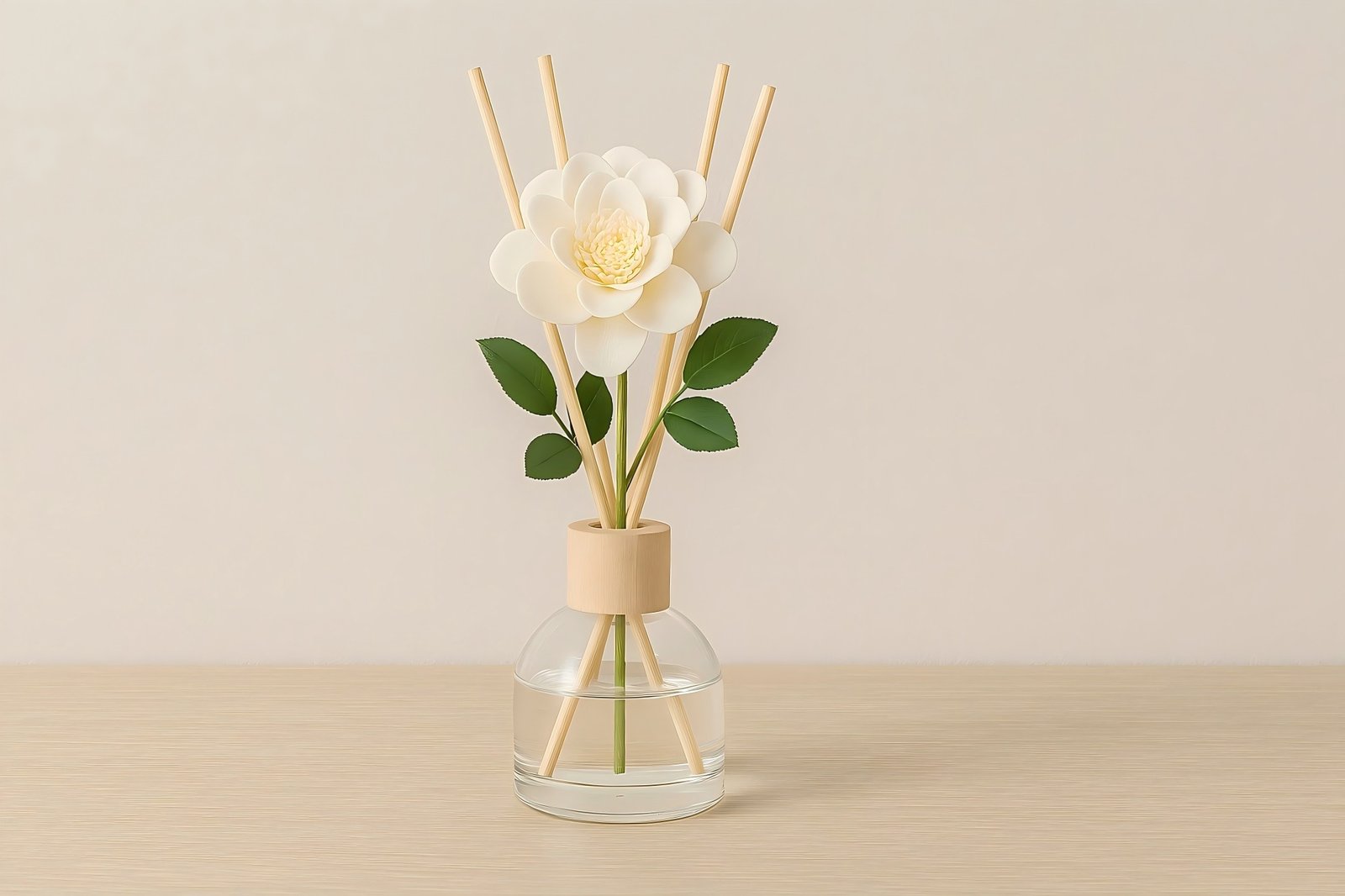
The Classic Reed Diffuser: A Quick Refresher
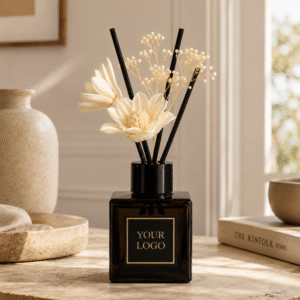
For those new to the category, a reed diffuser consists of a bottle of scented oil and a bundle of porous reeds (usually made of rattan). The oil travels up the reeds through capillary action and evaporates into the air, releasing fragrance.
It is beloved for its:
- Segurança: No flame, no electricity.
- Simplicity: No assembly required.
- Longevidade: A single bottle can last months.
But it also has limitations: you cannot control the intensity, and the reeds can eventually clog or become saturated.
Path 1: More Natural
The biggest wave hitting our industry is the demand for "clean" and "natural" products. This is profoundly affecting reed diffusers.
What "More Natural" Means for Manufacturing:
1. Natural Base Oils:
Traditionally, reed diffuser bases are a blend of solvents like MMB (3-methoxy-3-methyl-1-butanol) ou DPG (dipropylene glycol) . These are synthetic, but they are excellent at carrying fragrance and evaporating.
Now, buyers are asking for natural alternatives. We are seeing increased demand for:
- Bio-based solvents: Derived from corn or other renewable sources.
- Fractionated Coconut Oil: A natural oil that remains liquid, though it evaporates more slowly and has a different "wicking" behavior.
The Challenge: Natural bases are often thicker and more viscous. This affects how fast the oil travels up the reed. As a manufacturer, we must reformulate and test extensively to ensure that a "natural" diffuser performs as well as a traditional one.
2. Natural Fragrances:
This means using more essential oils and natural isolates. But essential oils are volatile and can degrade faster in a reed system.
The ENO Aroma Approach: We work with our perfumers to create natural fragrance blends that are stable for the lifespan of the product (3-6 months). We also test different reed materials to find the best match for these thicker, natural oils.
3. Sustainable Packaging:
"Natural" extends beyond the liquid. We are seeing a massive shift toward:
- Glass bottles made from recycled content (PCR glass).
- Labels made from recycled paper or sugar cane.
- FSC-certified paper for boxes.
- Reed alternatives: Bamboo reeds, or even recycled paper reeds.
Path 2: More Intelligent
Can a passive product become smart? The answer is yes. We are seeing the rise of "smart" features being integrated into the reed diffuser category.
What "More Intelligent" Means for Manufacturing:
1. Intensity Control Mechanisms:
The number one complaint about reed diffusers is that you cannot control the strength. Manufacturers are solving this with clever mechanical designs.
- Adjustable Collars/Sleeves: Some new diffuser designs include a sleeve that covers part of the reeds. Pull the sleeve up to expose more reeds (stronger scent), push it down to cover them (lighter scent).
- Rotating Lids: Lids that twist to open or close holes in the top, allowing you to control how much air interacts with the oil.
2. Reed Innovation:
The reed itself is becoming smarter.
- Micro-porous Reeds: These are engineered reeds (sometimes made of synthetic fibers) that wick oil more consistently than natural rattan. They are less likely to clog and provide a more even scent throw.
- Color-Changing Reeds: Reeds that absorb colored oil, acting as a visual indicator of when the oil is running low (the color fades at the top).
3. Usage Tracking (The Future):
Imagine a diffuser that tells you when to flip the reeds or when the bottle is almost empty. While not mainstream yet, we are exploring NFC (Near Field Communication) tags embedded in the label. A user taps their phone to the bottle and gets a notification: "It’s time to flip your reeds" or "Order a refill now."
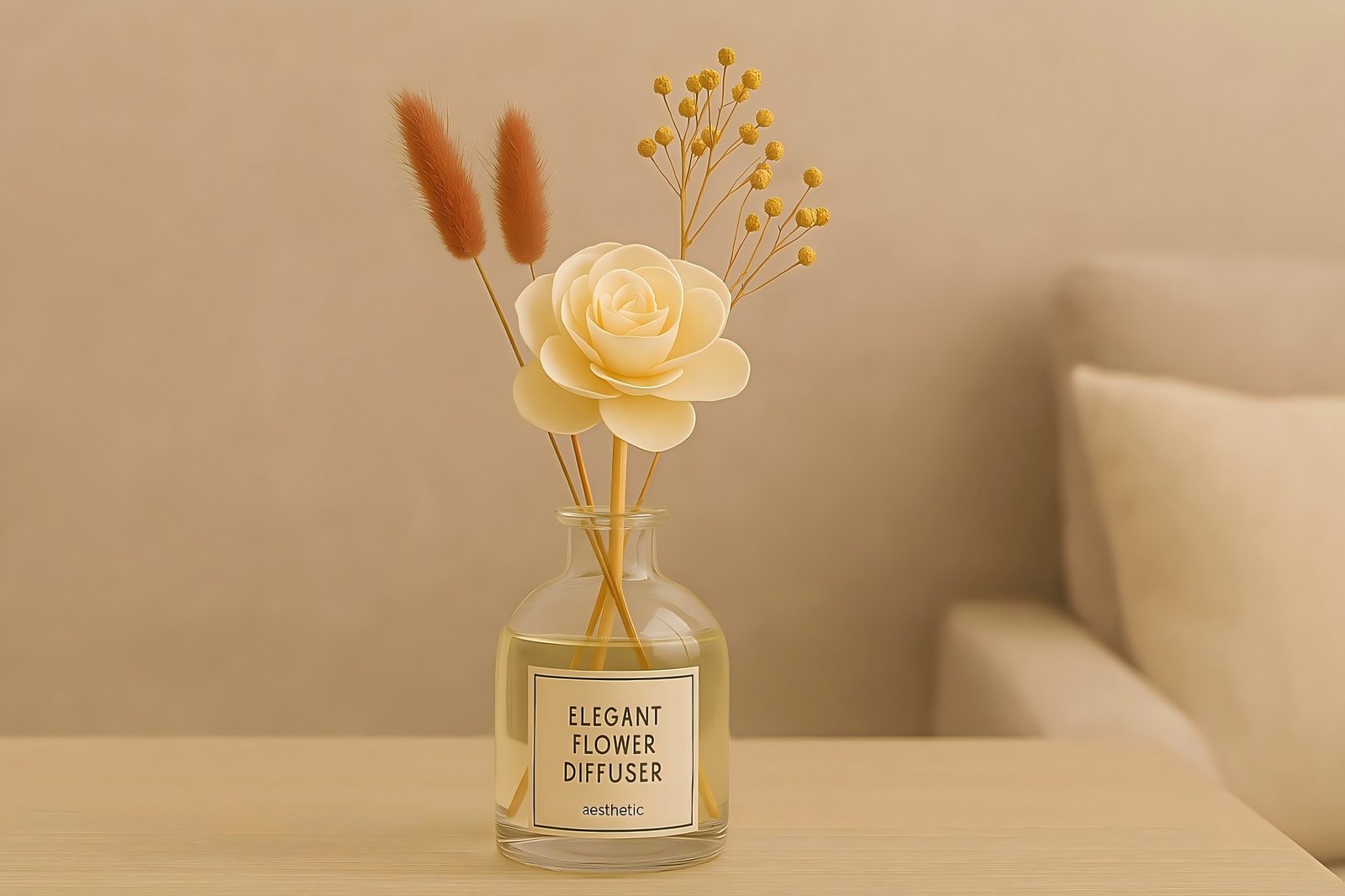
Path 3: More Diverse
The market is fragmenting. The "one size fits all" reed diffuser is disappearing. Buyers are looking for products that fit specific lifestyles and aesthetics.
What "More Diverse" Means for Manufacturing:
1. Shape and Form Factor Innovation:
Gone are the days of only the tall, cylindrical bottle. We are seeing:
- Low, wide vessels (like apothecary jars).
- Geometric shapes (hexagons, cubes).
- Ceramic and concrete vessels that are reusable after the oil is gone.
2. Scent Profiles for Specific Moods:
The diversity of scents is exploding. Beyond lavender and vanilla, we are creating diffusers for:
- Focus and Productivity: Rosemary, peppermint, and citrus blends.
- Sleep and Relaxation: Cedarwood, chamomile, and lavender.
- Energy: Grapefruit, ginger, and lemongrass.
- Functional Scents: Even insect-repelling blends (citronella) or pet-friendly scents.
3. Size Diversity:
We are producing smaller diffusers for small spaces (bathrooms, offices) and larger, high-capacity diffusers for commercial spaces (hotel lobbies, spas). The range is expanding.
4. Home Decor Integration:
Reed diffusers are no longer just air fresheners; they are decor objects. We are working with designers to create bottles that look beautiful even when the reeds are removed. The refill becomes a hidden insert, and the outer vessel is a permanent piece of art.
The Manufacturer’s Challenge: Balancing All Three
As a factory, the challenge is that these three paths—Natural, Intelligent, and Diverse—often pull in different directions.
- Natural materials can be harder to work with and more expensive.
- Intelligent features (like adjustable sleeves) require more complex injection molds and assembly.
- Diverse shapes mean shorter production runs and more changeovers, which can increase costs.
Em ENO Aroma, we embrace this complexity. We invest in R&D to solve the technical problems of natural bases. We work with mold makers to create smart, adjustable designs. We keep a flexible production line that can handle small batches of diverse shapes without slowing down.
So, Which Is the Future?
The future of reed diffusers is not one single path. It is a convergence.
The winning products will be those that are:
- Naturally derived (to satisfy the clean-conscious consumer).
- Cleverly designed (to solve the problem of intensity control).
- Beautifully diverse (to fit into any home aesthetic).
Em ENO Aroma, we are not just watching these trends; we are helping our clients build them. Whether you want a 100% natural soy-based diffuser, a diffuser with an adjustable intensity sleeve, or a uniquely shaped ceramic vessel, we have the expertise to bring it to life.
What is your vision for the perfect reed diffuser? Let’s build it together.



 Portuguese
  English
  Spanish
  French
  Russian
  Polish
  Czech
Czech