
Creating your own signature scent feels impossible when you don’t know where to begin this ancient art form.
Start making perfumes at home by gathering essential perfume making supplies: glass bottles, carrier alcohol, essential oils, and basic measuring tools. Begin with simple three-note formulas using top, middle, and base notes to create your first homemade fragrances.
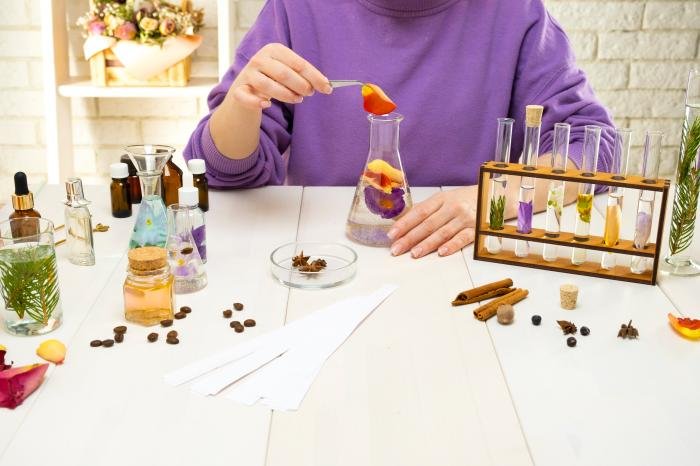
The growing fascination with DIY perfume making has transformed from exclusive craft to accessible hobby. Modern perfume making supplies make it possible for anyone to explore custom scents from their kitchen. This artistic science combines creativity with precision, allowing you to develop beginner perfume making skills that reflect your unique preferences. Creating homemade fragrances offers unmatched satisfaction – wearing a scent you’ve personally crafted captures something no commercial perfume can replicate.
What Essential Supplies Do You Need for Making Perfumes?
Starting perfume creation feels overwhelming when you don’t know which essential perfume making equipment to buy first.
The essential perfume supplies include glass bottles, essential oils, alcohol carrier, measuring tools, and mixing equipment. Quality glass containers prevent contamination while precise measurements ensure consistent results.
Core Equipment for Perfume Creation
Every successful perfume maker needs reliable DIY perfume tools that deliver precise results. Glass beakers form the foundation of your workspace – choose borosilicate glass for durability and chemical resistance. Start with 25-50ml beakers for small batches and add larger ones as your skills develop.
Measuring accuracy determines perfume quality. Digital scales measuring to 0.01g ensure consistent formulations. Glass droppers and graduated cylinders help control liquid proportions precisely. Stirring rods made from glass prevent unwanted reactions with your fragrance compounds.
| Essential Tool | Objetivo | Recommended Size |
|---|---|---|
| Glass Beakers | Mixing base | 25ml, 50ml, 100ml |
| Digital Scale | Precise measurements | 0.01g accuracy |
| Garrafas de vidro | Final storage | 10ml, 30ml, 50ml |
| Droppers | Controlled dispensing | Various sizes |
| Stirring Rods | Gentle mixing | 6-8 inches |
Ingredients and Storage Solutions
Beginner perfume supplies must include high-quality base materials. Essential oils serve as your primary fragrance source – start with versatile options like bergamot, lavender, and sandalwood. Carrier alcohol (ethanol at 190 proof) creates the liquid base, while distilled water helps achieve desired concentrations.
Proper storage extends ingredient life significantly. Dark glass bottles protect light-sensitive oils, while airtight seals prevent evaporation. Label everything clearly with dates and concentrations. Temperature-controlled storage maintains oil integrity – room temperature works for most ingredients, but refrigeration benefits delicate florals.
Professional starter kits often provide excellent value for beginners, including pre-measured ingredients and step-by-step guides that eliminate guesswork from your first creations.
How Do Fragrance Oils and Essential Oils Differ?
Most DIY perfume makers struggle to understand which oils create lasting scents. This confusion often leads to disappointing results and wasted ingredients.
Óleos de fragrância are synthetic compounds designed to mimic scents, while óleos essenciais are natural plant extracts. The key difference lies in their origin: fragrance oils offer consistent scent profiles and longevity, whereas essential oils provide authentic botanical aromas with therapeutic benefits.
Natural vs Synthetic Origins
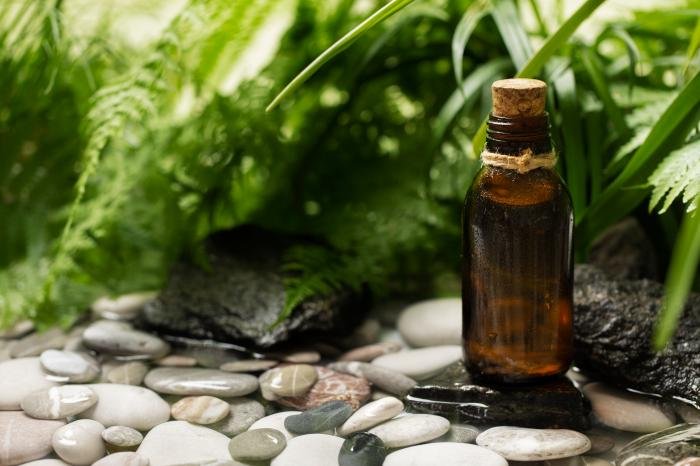
The fundamental distinction between these perfume ingredients comes down to their source and manufacturing process. Essential oils are extracted directly from plant materials using methods like steam distillation or cold pressing. They retain the natural chemical compounds found in flowers, leaves, bark, or roots.
Fragrance oils, conversely, are created in laboratories using synthetic molecules. These compounds can replicate natural scents or create entirely unique fragrances impossible to achieve with plant extracts alone. This synthetic approach allows for greater consistency in oil quality and scent profile across different batches.
Performance and Longevity Differences
When it comes to perfume making, each type offers distinct advantages. Fragrance oils typically provide superior longevity because their synthetic molecules are designed to have specific volatility rates. They resist evaporation better than most natural compounds, resulting in scents that last longer on the skin.
Essential oils tend to evaporate more quickly due to their natural composition. However, they offer complexity and depth that synthetic alternatives often lack. Many DIY enthusiasts find that blending both types creates the perfect balance of authenticity and performance.
| Characteristic | Óleos essenciais | Óleos de fragrância |
|---|---|---|
| Origin | Natural plant extracts | Synthetic laboratory compounds |
| Consistency | Varies by harvest/season | Uniform across batches |
| Longevidade | 2-4 hours typically | 6-8 hours or more |
| Custo | Higher (especially rare oils) | More affordable |
| Scent Range | Limited to natural sources | Unlimited possibilities |
| Therapeutic Properties | Sim | Não |
Can You Explain Top, Middle, and Base Notes?
Confused by fragrance terminology when starting your DIY perfume journey? The mystery of scent layering often overwhelms beginners.
Fragrance structure consists of three distinct layers: top notes provide the initial impression, middle notes form the heart, and base notes create the lasting foundation. This pyramid system determines how your perfume composition develops over time.

The Evaporation Timeline
Top notes evaporate within the first 15 minutes of application. These volatile compounds include citrus oils like lemon and bergamot, creating that immediate burst of freshness. Middle notes emerge after 30 minutes and can last 2-4 hours. Rose, lavender, and geranium commonly serve as heart notes, providing the main character of your blend. Base notes appear last but linger for 6-8 hours or longer. Sandalwood, vanilla, and patchouli anchor the entire composition.
Building Your Scent Layers
Understanding note ratios helps create balanced compositions. Professional perfumers typically use 20% top notes, 50% middle notes, and 30% base notes. However, beginners should start with simpler ratios like 30-40-30 for easier blending.
| Tipo de nota | Evaporation Time | Common Examples | Typical Ratio |
|---|---|---|---|
| Notas de topo | 15-30 minutos | Citrus, herbs | 20-30% |
| Notas de Coração | 2-4 horas | Florals, spices | 40-50% |
| Notas de base | 6+ hours | Woods, resins | 20-30% |
Quality starter kits include pre-measured essential oils representing each layer. This eliminates guesswork and ensures your first attempts yield wearable results. Fast delivery options help maintain your creative momentum when inspiration strikes.
What Are Fixatives and Why Do They Matter?
Ever noticed how some perfumes disappear within hours while others linger beautifully all day? The secret lies in understanding fixatives – the unsung heroes of perfume longevity.
Fixatives are essential ingredients that bind scent molecules together, slowing their evaporation rate and significantly extending your fragrance’s wear time. These natural or synthetic compounds act as molecular anchors, ensuring your carefully crafted blend maintains its character throughout the day.

The Science Behind Scent Binding
Fixatives work by creating molecular bonds with volatile aromatic compounds. When you add benzoin resin or frankincense to your blend, these heavy molecules slow down the evaporation of lighter notes like citrus or florals. Think of fixatives as the foundation of a house – they support everything built upon them.
The most effective natural fixatives include resins (benzoin, myrrh), woods (sandalwood, cedarwood), and certain florals (jasmine, rose). Each type offers different binding properties and contributes unique olfactory characteristics to your creation.
Choosing the Right Fixatives for Beginners
| Fixative Type | Impacto na longevidade | Perfil olfativo | Melhor para |
|---|---|---|---|
| Benzoin Resin | 8-12 horas | Warm, vanilla-like | Oriental blends |
| Incenso | 6-10 horas | Woody, spiritual | Meditation scents |
| Sândalo | 10-14 hours | Creamy, smooth | Unisex fragrances |
| Patchouli | Mais de 12 horas | Earthy, rich | Bohemian compositions |
Starting with 10-15% fixative content ensures good perfume stability without overwhelming your blend. Quality starter kits typically include pre-measured fixatives, making your first attempts both successful and educational.
How Should You Approach Blending and Layering Scents?
Starting fragrance creation feels overwhelming with countless oils and endless possibilities. Creating harmonious blends requires understanding ratios, compatibility, and systematic approaches. The right techniques transform random mixing into meaningful scent creation.
Professional perfumers follow specific blending rules and layering techniques to create balanced fragrances. Start with the 20-50-30 ratio: 20% top notes, 50% middle notes, and 30% base notes. Test combinations in small batches before committing to larger quantities.
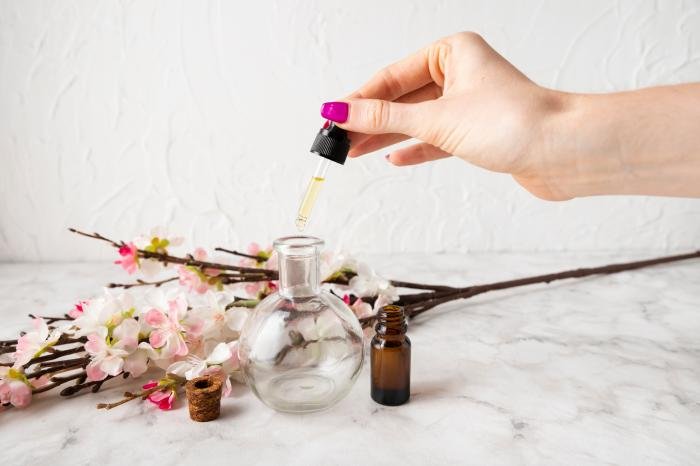
Understanding Perfume Ratios and Structure
The foundation of successful fragrance combinations lies in understanding the three-tier structure: top, middle, and base notes. Top notes provide the initial impression but fade quickly within 15-30 minutes. Middle notes form the heart of your fragrance, lasting 3-5 hours. Base notes anchor the blend and can persist for 6-8 hours or longer.
When learning how to blend oils effectively, always start with your base notes. These heavy, rich scents like sandalwood, vetiver, or vanilla create the foundation. Add middle notes such as lavender, geranium, or ylang-ylang to bridge the gap. Finally, incorporate bright top notes like citrus, mint, or eucalyptus for immediate impact.
Essential Techniques for Scent Harmonizing
Successful layering scents requires understanding fragrance families and their compatibility. Citrus pairs beautifully with florals, while woody notes complement spicy and oriental scents. Start with single-note oils to understand each component before creating complex fragrance combinations.
| Família de fragrâncias | Compatible Partners | Avoid Mixing With |
|---|---|---|
| Citrinos | Floral, Fresh, Light Woods | Heavy Musks, Strong Spices |
| Floral | Citrus, Light Woods, Vanilla | Patchouli, Strong Smoke |
| Woody | Spice, Oriental, Some Florals | Bright Citrus, Aquatic |
| Oriental | Woody, Spice, Vanilla | Fresh Greens, Light Florals |
Test each blend on paper strips first, allowing the scent to develop for at least 30 minutes. Document successful combinations and note which ratios work best. Professional starter kits often include pre-tested combinations and detailed guides to accelerate your learning process while ensuring consistent results.
Are There Simple DIY Perfume Recipes to Try First?
Starting your fragrance journey feels overwhelming when faced with hundreds of essential oils and complex blending techniques.
Yes, there are several beginner-friendly DIY perfume recipes that require only 3-5 ingredients and basic equipment. These starter perfume projects use simple ratios and common essential oils to create custom scent creations without professional training.

Essential Three-Note Formula
The simplest homemade fragrance follows the classic three-note structure: top, middle, and base. Start with citrus oils like lemon or bergamot for brightness, add floral notes such as lavender or geranium for the heart, and ground your blend with woody scents like sandalwood or cedarwood.
Mix 10-15 drops of essential oils total with 2 tablespoons of high-proof vodka. Let this easy perfume formula mature for 2-4 weeks, allowing the alcohol to marry the oils naturally. Begin with equal parts of each note category, then adjust based on your preferences.
Beginner-Friendly Recipe Variations
| Recipe Type | Top Note | Middle Note | Base Note | Alcohol Ratio |
|---|---|---|---|---|
| Fresh Citrus | Lemon (5 drops) | Lavender (3 drops) | Sandalwood (2 drops) | 2 tbsp vodka |
| Floral Garden | Bergamot (4 drops) | Rosa (4 gotas) | Baunilha (2 gotas) | 2 tbsp vodka |
| Especiaria Amadeirada | Laranja (5 gotas) | Canela (2 gotas) | Cedro (3 gotas) | 2 tbsp vodka |
Estes projetos de perfume para iniciantes eliminam as suposições enquanto desenvolvem confiança. Cada fórmula custa menos de $20 para criar e produz fragrância suficiente para vários frascos pequenos, tornando-os perfeitos para testar preferências pessoais antes de investir em quantidades maiores ou blends mais complexos.
Conclusão
Iniciar sua jornada de fabricação de perfume DIY transforma-se de um desafio intimidante em uma recompensadora saída criativa quando você compreende os fundamentos. Com suprimentos básicos para fazer perfume, conhecimento das notas de fragrância e receitas simples de três ingredientes, você pode criar composições de aroma personalizadas que refletem sua personalidade única. A comunidade de fabricação de perfume recebe os iniciantes de braços abertos, oferecendo suporte e inspiração enquanto você desenvolve suas habilidades. Lembre-se, todo perfumista mestre começou com sua primeira mistura – abrace a experimentação, documente suas descobertas e deixe seu nariz guiá-lo em direção a dicas de fragrância caseira assinada que se tornam expressões pessoais preciosas.
FAQ
Q1: Quais suprimentos essenciais para fazer perfume os iniciantes precisam para começar a criação de fragrância DIY?
Iniciantes precisam de suprimentos básicos para fazer perfume, incluindo óleos carreadores (óleo de jojoba ou óleo de coco fracionado), óleos essenciais para notas de saída, corpo e fundo, álcool perfumado, copos de mistura de vidro, conta-gotas, frascos de vidro escuro para armazenamento e ferramentas de medição. A maioria dos kits de perfume DIY inclui esses itens essenciais com instruções detalhadas sobre como misturar óleos de forma eficaz. Comece com 5-10 óleos essenciais para aprender a estratificação adequada de aromas antes de expandir sua coleção.
Q2: Como estratificar corretamente os aromas ao aprender tutoriais de fragrância DIY?
A estratificação de aromas segue a estrutura clássica da pirâmide de perfume: comece com as notas de fundo (cedro, baunilha, almíscar) que duram mais, adicione notas de corpo (florais, ervas) para o corpo e finalize com notas de saída (cítricos, florais leves) para o impacto inicial. Ao aprender como misturar óleos, use uma proporção inicial de 30% de fundo, 50% de corpo e 20% de saída como diretriz. Permita que cada camada assente por 24-48 horas antes da avaliação final, pois os aromas se desenvolvem e amadurecem com o tempo.
Q3: O que normalmente está incluído em kits de suprimentos para fazer perfume e quão rápido eles são enviados?
Kits de suprimentos para fazer perfume de qualidade incluem 8-12 óleos essenciais, óleo carreador, álcool perfumado, ferramentas de mistura, frascos de vidro escuro, etiquetas e guias passo a passo para iniciantes DIY. A maioria dos fornecedores respeitáveis oferece envio de 2-5 dias para pedidos nacionais. O conteúdo do kit varia de acordo com o preço, com kits premium incluindo óleos mais exóticos e ferramentas de grau profissional. Sempre verifique as opções de reembolso e certificações de qualidade dos ingredientes antes de comprar.
Q4: Pequenas startups podem usar suprimentos de fabricação de perfume DIY para criar produtos comerciais?
Sim, muitas pequenas marcas de perfume começam com suprimentos de fabricação de perfume DIY de alta qualidade antes de escalar para a produção comercial. No entanto, vendas comerciais exigem rotulagem adequada, divulgação de ingredientes, testes de segurança e conformidade com regulamentações de cosméticos. Comece aperfeiçoando suas formulações usando tutoriais de fragrância DIY e consulte químicos cosméticos e especialistas regulatórios quando estiver pronto para comercializar. Muitas marcas de nicho de sucesso começaram como perfumistas amadores usando suprimentos básicos.
Q5: Quais são os erros mais comuns que os iniciantes cometem ao aprender como misturar óleos para perfumes?
Erros comuns incluem usar muitos óleos de uma vez (comece com 3-5), não permitir o tempo de maturação adequado (mínimo de 2-4 semanas), proporções incorretas entre as notas de fragrância e não manter registros detalhados das misturas. Muitos iniciantes também pulam o teste de diluição e usam óleos carreadores de baixa qualidade. Siga tutoriais de fragrância DIY estruturados, comece de forma simples com experimentos de nota única e sempre teste pequenos lotes antes de criar quantidades maiores. Documente cada mistura para referência e aprimoramento futuros.
- Makesy – Kits e Suprimentos Completos para Fazer Perfume DIY
- PerfumersWorld – Ingredientes e Educação Profissional em Fragrância
- The Perfume Society – Guia do Iniciante para Compreender Fragrância
- DIY Natural – Guia de Mistura de Óleos Essenciais para Iniciantes
- Bramble Berry – Tutoriais de Óleo de Fragrância e Fabricação de Perfume


 Portuguese
  English
  Spanish
  French
  Russian
  Polish
  Czech
Czech