
In the world of home fragrance, reed diffusers have become a staple for those seeking a continuous, flame-free aroma experience. While the scent oil captures most of the attention, the true unsung hero is the base liquid. This clear, often unassuming solution is what quietly carries the fragrance up the reeds, filling your room with a consistent, lasting scent. But what separates a premium diffuser from a disappointing, short-lived one? The answer lies in the secrets of its formulation and production.
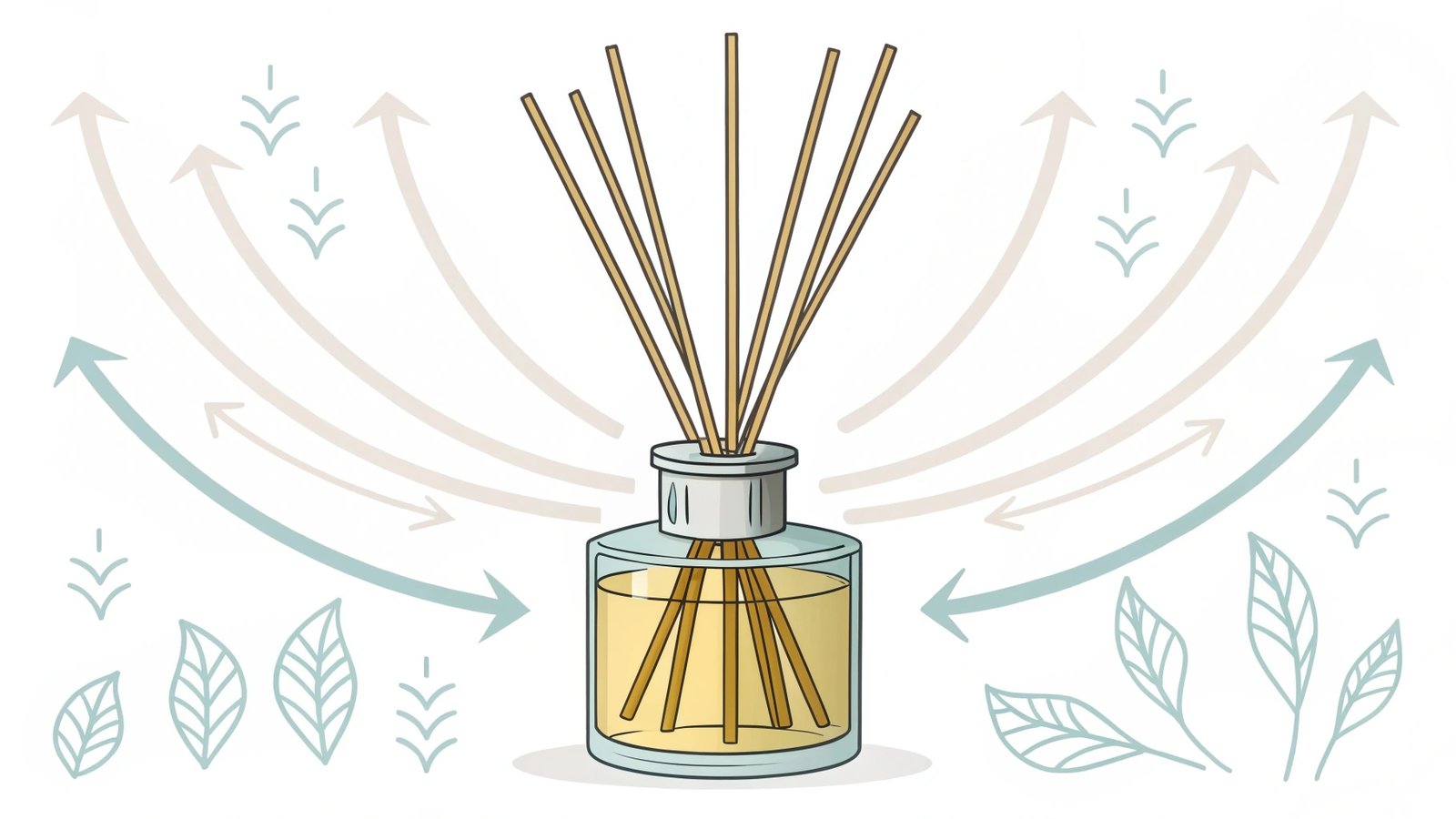
The Core Purpose: More Than Just a "Carrier"
A high-quality base liquid isn’t just a solvent; it’s a sophisticated delivery system. It must:
- Evenly disperse fragrance oils without clouding or separating.
- Control the rate of diffusion for a steady scent throw that lasts for months.
- Maintain stability in various temperatures and light conditions.
- Be safe for home use around fabrics, surfaces, and pets.
Decoding the Formulation: A Trio of Key Components
The classic and most effective base liquid is a carefully balanced blend of three primary ingredients:
1. The Solvent: The Foundation
This is the bulk of the mixture, responsible for dissolving the fragrance oil.
- 99% Isopropyl Alcohol (IPA): The industry gold standard for premium diffusers. High-purity IPA evaporates at the perfect rate, creating a consistent capillary action up the reeds. It’s an excellent solvent for most fragrance oils, preventing separation. The key secret here is the purity level—99% IPA contains minimal water, which prevents cloudiness and microbial growth.
- Alternative Solvents: Some "natural" or niche brands use purified water combined with emulsifiers (like polysorbate 20) or other plant-derived solvents (like dipropylene glycol). The production challenge here is achieving perfect homogenization and preventing rapid bacterial growth without synthetic preservatives.
2. The Fragrance Oil: The Soul
This is the concentrated scent. The secret isn’t just the oil’s quality, but its compatibility.
- Concentration: Premium diffusers typically use a 25-35% fragrance load. Too little, and the scent is weak; too much, and it can overwhelm the system, slowing diffusion or causing separation.
- Solubility: The oil must be fully soluble in the chosen solvent. Perfumers often tailor fragrance formulations specifically for reed diffuser applications, considering the chemical interaction with the base.
3. The Modifier: The Performance Enhancer
A small but critical additive that fine-tunes the base’s physical properties.
- Function: It adjusts the surface tension and viscosity of the liquid. This is the master secret to controlling diffusion speed. A well-chosen modifier ensures the liquid climbs the reeds at an optimal pace—neither too fast (emptying the bottle in weeks) nor too slow (weak scent throw).
- Common Examples: These are often specialized glycol ethers or surfactants. The exact type and ratio are closely guarded secrets by leading manufacturers.
Behind the Scenes: Production Secrets for Consistency
Formulation is only half the battle. Consistent, high-quality production is what brings it to life.
-
Precision Weighing: Every component is measured by weight (not volume) with laboratory-grade scales for absolute batch-to-batch consistency.
-
The Order of Mixing (The Critical Sequence):
- Secret Step: The modifier is always blended with the fragrance oil first. This ensures the oil is perfectly "prepared" and will integrate seamlessly with the main solvent.
- This pre-mix is then slowly added to the solvent (e.g., IPA) under constant, gentle agitation.
-
Controlled Environment: Production areas are climate-controlled. Temperature and humidity can affect mixing and the final product’s clarity.
-
The Resting Period (Aging): After mixing, the batch is often left to "rest" or "age" for 24-72 hours. This allows any microscopic air bubbles to dissipate and the formulation to fully stabilize, resulting in crystal-clear liquid.
-
Rigorous Quality Control (QC):
- Clarity Test: The liquid must be water-clear with no haze or particulates.
- Stability Test: Samples are placed in hot and cold cycles to ensure no clouding or separation occurs.
- Diffusion Test: Mock setups with reeds are used to visually check the climb rate and initial scent throw.
Why DIY Diffuser Recipes Often Fall Short
Many homemade recipes use a simple mix of water, vodka, and essential oils. While they can smell nice initially, they often suffer from:
- Rapid Separation: Essential oils and water don’t mix without a strong emulsifier.
- Weak or Inconsistent Scent Throw: Water evaporates too slowly, and vodka (typically 40% ABV) contains too much water.
- Microbial Growth: Water-based mixtures can develop mold or bacteria without preservatives.
Choosing a High-Quality Diffuser: What to Look For
- Clarity: The liquid should be perfectly clear, not milky or hazy.
- Lançamento de perfume consistente: The fragrance should be steady, not fading in and out.
- Longevidade: A 100ml diffuser should last 3-4 months. Rapid evaporation indicates an unbalanced formula.
- Reputable Brands: Established brands invest in R&D and quality control to perfect their base liquid.
The Bottom Line
The magic of a premium reed diffuser lies in the meticulous science of its base liquid. It’s a harmonious blend of the right materials, mixed in the right order, under the right conditions. The next time you enjoy the subtle, continuous fragrance from a diffuser, you’ll appreciate the invisible engineering at work—the carefully guarded formulation and production secrets that transform simple ingredients into an enduring atmosphere of scent.


 Portuguese
  English
  Spanish
  French
  Russian
  Polish
  Czech
Czech