
In today’s world, consumers care not only about how a fragrance product smells, but also about what it means for the planet. Sustainability has evolved from a "trend" to an industry responsibility and core standard .
As a fragrance factory with over a decade of manufacturing experience, we understand that true quality is reflected not only in the layers and longevity of a scent, but also in the environmental choices we make. From the liquid inside the bottle to the material of the bottle itself, and every reed inserted within—every step offers possibilities for more eco-friendly practices.
This article delves into the sustainable manufacturing of reed diffusers, focusing on the three core elements of eco-friendly solvents, recyclable glass bottles, and FSC-certified reeds. We aim to help your customers understand what truly constitutes a "beautiful inside and out" green fragrance product.

1. The Foundation of Sustainable Manufacturing: Why Does It Matter?
The fragrance industry is intrinsically linked to nature—we draw inspiration from plants and bring the scents of the outdoors into our homes. Therefore, protecting this source is our undeniable responsibility.
Sustainable manufacturing is more than just a marketing gimmick; it manifests in:
- Raw Material Selection: Prioritizing renewable and biodegradable sources to reduce reliance on fossil fuels .
- Packaging Design: Utilizing recyclable and reusable materials to extend product lifecycles and reduce waste .
- Production Processes: Optimizing techniques to minimize waste, lower carbon emissions, and achieve efficient, clean manufacturing .
For B2B clients, choosing a sustainable supply chain not only meets the expectations of end consumers but also serves as a "passport" for brands to enter markets with strict environmental regulations, such as those in Europe and America.
2. Eco-Friendly Solvents: The "Green Heart" of Reed Diffusers
Solvents form the main body of reed diffuser oil, carrying the fragrance and enabling its evaporation into the air via the reeds. Traditional solvents are largely derived from the petrochemical industry, but today, more environmentally friendly bio-based solvents are leading the change .
2.1 What Are Bio-Based Solvents?
Bio-based solvents are derived from renewable raw materials, such as vegetable glycerin, corn, and other plant sources. They are designed to replace traditional petroleum-based derivatives (like DPG, MMB, etc.) while maintaining or even enhancing product performance .
2.2 A Representative Eco-Friendly Solvent: The Augeo® Series
Сайт Augeo® series, developed by Solvay, is a representative product in the field of eco-friendly solvents . Derived from renewable resources, it is specifically engineered for high performance and sustainability.
Key Advantages of Augeo® Clean MULTI:
- Renewable Origin: Manufactured from plant-based raw materials .
- Optimal Evaporation Rate: Its unique evaporation profile means the diffuser oil lasts longer, thereby reducing the consumption of glass bottles, reeds, and packaging cardboard, and also decreasing transportation frequency—offering additional cost-saving benefits .
- Ideal Substitute: It serves as an ideal replacement for traditional solvents such as glycols and glycol ethers .
Key Advantages of Augeo® Crystal:
- 100% Vegetable Glycerin: Sourced from vegetables .
- Biodegradable: Returns to nature without burden .
- Low VOC (Volatile Organic Compounds): Complies with strict environmental regulations .
- Non-Toxic, Low Odor: Safer for people and the environment, with a very low inherent odor that does not interfere with the natural scent of the fragrance oil .
2.3 Performance Comparison: Eco-Friendly vs. Traditional Solvents
| Solvent Type | Representative Components | Source | Environmental Characteristics | Impact on Fragrance |
|---|---|---|---|---|
| Traditional Solvents | DPG (Dipropylene Glycol) | Petrochemical | Non-renewable | Good performance, but not a green choice |
| DPM (Dipropylene Glycol Methyl Ether) | Petrochemical | Considered VOC, restricted | Can have a noticeable odor, may interfere with scent profile | |
| MMB (3-Methoxy-3-methyl-1-butanol) | Petrochemical | Some volatility | Slight inherent odor, requires formula adjustment | |
| Eco-Friendly Solvents | Augeo® Clean MULTI | Renewable Plant-Based | 40% lower carbon footprint, Biodegradable | Low odor, excellent diffusion, longer-lasting scent |
| IPG (Isopropylideneglycerol) | Renewable Plant-Based | Non-hazardous, environmentally friendly | Low odor, strong solvency, stable evaporation curve |
IPG (Isopropylideneglycerol), as a non-trademarked version chemically equivalent to Augeo®, offers a more cost-effective option while retaining all key environmental and performance advantages, suitable for 1:1 direct replacement .
Professional Advice: When using eco-friendly solvents, the recommended base formulation is 10%-25% fragrance oil mixed with 75%-90% eco-friendly base. Stir until clear and let it sit for 2-3 days before use .
3. Recyclable Glass Bottles: From Container to Resource
Glass is a classic choice for fragrance packaging, and "recyclability" and "reusability" are key to its sustainability.
3.1 100% Recyclable Material
Whether it’s the clear and transparent Flint Glass or the warm, jade-like Opal Glass, both are 100% подлежит вторичной переработке .
- Closed-Loop Recycling: Glass can be infinitely recycled and remelted to create new glass products without any loss of purity or quality.
- Reduced Raw Material Extraction: Using recycled glass (also known as cullet) can significantly lower the energy required for production and the need for virgin raw material extraction.
3.2 Reusable Design: From Diffuser to Storage
True sustainability goes beyond just "recyclable"—it’s about being "reusable."
- Refill Design: An increasing number of brands are introducing large-volume refills (e.g., 500-1000ml). Consumers can purchase refill oil and continue using their existing, beautiful glass bottles. This approach significantly reduces the turnover rate of packaging bottles .
- Vase or Storage Jar: Encourage consumers to clean the glass bottle after the diffuser oil is finished and repurpose it as a small flower vase, makeup brush holder, or home decor piece, giving the product a second life .
3.3 Responsible Accessory Choices
Beyond the glass bottle itself, accessories like caps are also evolving towards sustainability:
- Natural Wood: Using solid wood caps sourced from sustainably managed forests adds a touch of natural warmth to the product .
- Recyclable Plastic (PP): If plastic caps are used, opt for recyclable mono-materials (like PP) to facilitate consumer sorting and recycling efforts .
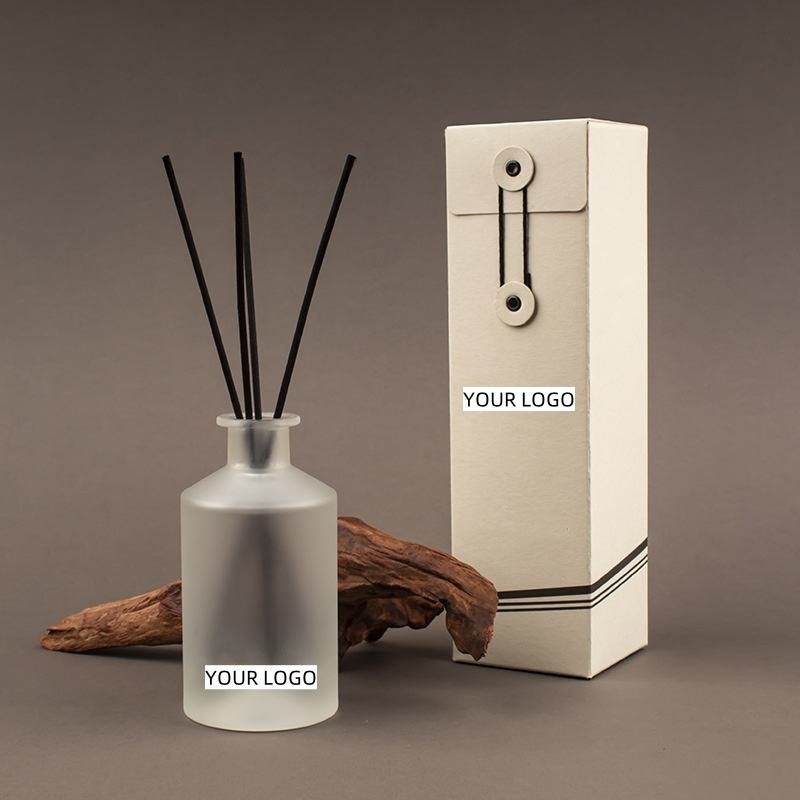
4. FSC-Certified Reeds: Sourced from Responsibly Managed Forests
Reeds are the "soul carriers" of the diffuser. The source and characteristics of the material directly impact both diffusion efficiency and environmental footprint.
4.1 What is FSC Certification?
FSC (Forest Stewardship Council) certification is an internationally recognized standard for responsible forest management. FSC-certified reeds mean that the raw materials used to make them come from forests managed in a responsible manner. These forests adhere to strict environmental and social standards during harvesting, ensuring biodiversity, the rights of local communities, and the long-term health of the forest .
4.2 Common Reed Materials and Sustainability Comparison
| Материал | Source & Sustainability | Diffusion Capability | Best Application Scenarios |
|---|---|---|---|
| Natural Rattan | Tropical climbing plant, fast-growing (harvestable in 2-3 years), renewable. Requires attention to whether sourced from sustainably certified plantations . | Превосходно (due to natural micro-porous structure, strong capillary action) | Large spaces requiring strong, stable diffusion |
| Natural Bamboo | One of the fastest-growing plants globally, matures in 3-5 years, no need for replanting. Highly renewable and biodegradable . | Хорошо | Modern-style homes, everyday use |
| Natural Wood (e.g., Cedar) | If FSC-certified, sourced from responsibly managed forests. Cedar wood carries a natural woody scent . | Fair to Good | Suitable for earthy and woody scent profiles, creating rustic or spa-like atmospheres |
| Natural Cork | Harvested from the bark of cork oak trees; the harvesting process does not harm the tree, and the bark regenerates. Highly sustainable . | Хорошо | Eco-luxury spaces追求 unique texture and modern minimalist design |
Expert Tip: Regardless of the material, to maintain optimal diffusion and extend reed life, it is recommended to flip the reeds every 1-2 weeks to refresh the scent and prevent natural pores from clogging. Also, diffusers should be placed away from direct sunlight and heat sources .
4.3 Reed Quality Control
As a manufacturer, source control over reed quality is crucial. Professional factories conduct "three-point material audits" on each batch of reeds:
- Pore Density: Ensuring sufficient space to absorb and release essential oil.
- Lignin Content: Excessively high lignin content can hinder oil transmission.
- Moisture Content Balance: Strictly controlled between 8-12% to ensure stable performance .
5. Innovation in Action: When Sustainable Design Becomes Reality
More and more brands are translating sustainability concepts into tangible products:
- The Renewed Beauty of Recycled Glass: Some brands (like WOO) collect discarded wine bottles, clean and process them, transforming them into elegant diffuser containers. This not only reduces waste but also赋予 the product a unique texture and story .
- Zero-Waste Bamboo Lids and Natural Reeds: Pairing bamboo lids with natural rattan reeds ensures the entire product, from bottle to accessories, embodies the concept of natural cycles .
- Large-Volume Refill Strategy: Factories can offer various sizes of diffuser refills, encouraging consumers to retain and reuse their original glass bottles—currently one of the most effective waste reduction methods .
6. Summary: Manufacturer’s Checklist for Sustainable Diffusers
For B2B clients aiming to create genuinely eco-friendly diffuser lines, here are key elements to consider when evaluating your supply chain:
| Dimension | Sustainable Practice | Environmental & Business Value |
|---|---|---|
| Solvent | Use bio-based solvents (e.g., Augeo® or IPG) instead of petrochemical solvents | Lower carbon footprint, biodegradable, compliance with stringent environmental regulations |
| Стеклянная бутылка | Use 100% recyclable glass and offer refill sizes | Enables resource circulation, extends packaging life, enhances brand value |
| Камыши | Source FSC-certified rattan or sustainably sourced bamboo/cork | Protects forest resources, ensures transparent and responsible supply chain |
| Accessories | Use solid wood (sustainable sources) or recyclable mono-material plastics | Facilitates sorting and recycling, reduces challenges of mixed material disposal |
| Упаковка | Use boxes made from recycled paperboard, minimize ink usage | Reduces the overall environmental impact of packaging |
Заключение
Sustainable manufacturing is not a distant ideal but a concrete choice made in every drop of solvent, every bottle, and every reed. As a production factory with over a decade of experience, we have both the capability and the responsibility to integrate these more environmentally friendly choices into your products.
From selecting bio-based solvents with a lower carbon footprint to customizing recyclable glass bottles and providing FSC-certified reeds, we are committed to working with you to create diffuser products that are not only pleasantly fragrant but also kind to the planet.
For more details on sustainable diffuser customization options, or to discuss how to upgrade your product line to an eco-friendly series, please contact our factory team today.






 Russian
  English
  Spanish
  Portuguese
  French
  Polish
  Czech
Czech