
When a customer picks up your product—whether it’s a reed diffuser, a candle, or a car fragrance—and takes that first sniff, they are experiencing the result of a long journey.
But what they don’t see is the hundreds of checkpoints that oil passed through to ensure that scent is perfect, safe, and consistent.
At ENO Aroma, quality is not a final inspection; it is built into every step of the process. Today, we invite you behind the scenes to follow the complete journey of a bottle of oil in our factory. We will show you exactly how we protect your brand’s reputation through rigorous quality control.
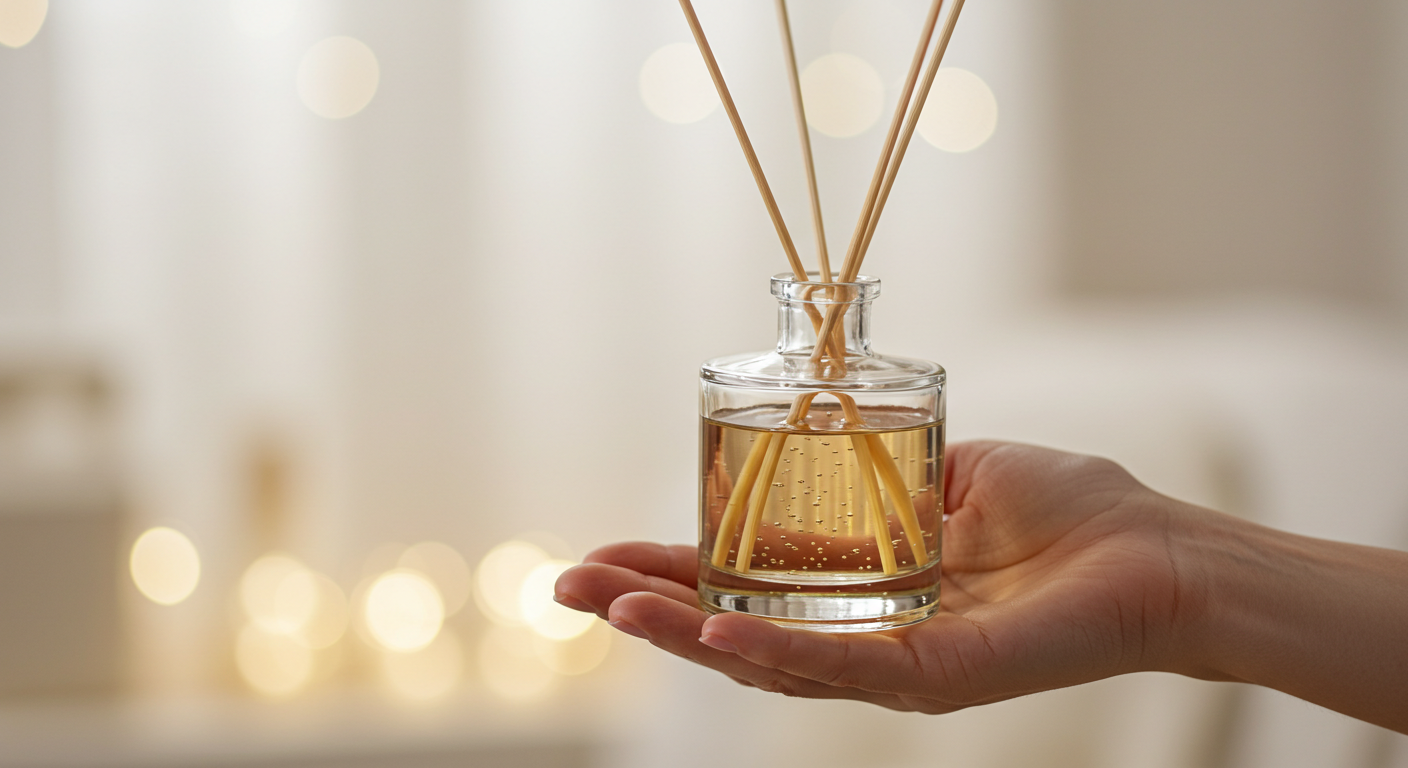
Stage 1: The Gatekeeper – Raw Material Inspection
The journey begins before any oil enters our production hall. The quality of the final product is entirely dependent on the quality of what goes into it.
What We Do:
- Supplier Qualification: We only work with certified raw material suppliers—both for essential oils and synthetic fragrance compounds. Every supplier must provide Certificates of Analysis (COA) and Material Safety Data Sheets (MSDS).
- Organoleptic Testing: Upon arrival, every batch is opened and physically tested. Our trained technicians evaluate the scent profile against a master standard. Does this Lavender oil smell exactly like Lavender should? Any off-notes or oxidation? If it fails the nose test, it is rejected immediately.
- Physical Properties: We measure specific gravity (density) and refractive index using laboratory equipment. These numbers are like a fingerprint for oils. If the density is off, it indicates contamination or adulteration.
The Result: Only raw materials that pass our triple-check (documentation, smell, and physical properties) are accepted into our warehouse. This is our first line of defense.
Stage 2: The Recipe – Pre-Blending Inspection
Once raw materials are approved, they move to our compounding department. This is where the magic happens—where individual aroma chemicals and essential oils are blended to create your custom fragrance.
What We Do:
- Formula Verification: Our system is barcode-driven. Before a technician starts blending, the system scans each drum to ensure the correct ingredient is being used in the correct quantity. This prevents cross-contamination and formulation errors.
- In-Process Checks: During blending, we monitor temperature and mixing time. Some oils are heat-sensitive; blending too fast or too hot can damage the delicate top notes of a fragrance.
Stage 3: The Waiting Game – Batch Aging (Maturation)
This is a step that many low-cost manufacturers skip—but it is essential.
After blending, the fragrance oil is not immediately ready to be bottled. It needs to rest.
What We Do:
- Aging/Maturation: We store the freshly blended oil in stainless steel tanks for a specified period (usually 24-72 hours, sometimes longer for complex blends). This allows the individual molecules to bond and stabilize. A fragrance that is bottled immediately can smell "sharp" or "disjointed." Aged fragrance smells smooth, rounded, and true to its final form.
- Post-Aging Test: After aging, we test the fragrance again. We ensure that the scent has matured correctly and that there is no sedimentation or separation.
Stage 4: The Filling Line – Process Control
Now the oil is ready to meet its bottle. This stage is about precision and cleanliness.
What We Do:
- Bottle Cleaning/Jetting: Before filling, empty bottles are often cleaned with ionized air to remove dust or static.
- In-Line Filling Checks: Automated filling machines are calibrated to deliver the exact volume. We perform random weight checks every 15-20 minutes to ensure that a 100ml bottle actually contains 100ml of oil (no short-filling!).
- Induction Sealing: After filling, the bottle moves to sealing. We use induction sealing to create an airtight bond. We test the seal strength regularly to ensure no leaks during shipping.
Stage 5: The Final Exam – Finished Product Inspection
Before the bottle is packed into a beautiful box, it must pass one final series of examinations.
What We Do:
- 100% Visual Inspection: Every bottle is inspected by trained eyes. We check for:
- Correct label application (no bubbles, crooked labels).
- Correct batch code printing.
- Cleanliness (no oil residue on the bottle neck or body).
- Cap alignment and security.
- Leakage Test (Sample): From every batch, we take random samples, place them sideways or upside down in an oven at 40-50°C for 24 hours, and check for leaks. This simulates the extreme conditions of ocean freight.
- Performance Test: For diffuser oils, we test a sample in an actual diffuser. Does it wick correctly? Is the scent throw as strong as expected?
Stage 6: The Paper Trail – Batch Documentation
Quality is not just about the physical product; it’s about traceability.
What We Do:
For every single batch of oil we produce, we create a Batch Manufacturing Record (BMR) . This document contains:
- The source of every raw material used.
- Who blended it and when.
- Who performed the quality checks.
- The results of all tests.
If there is ever an issue with a product a year from now, we can trace it back to the exact day it was made and the exact drum of raw material used.
Why This Matters to You, the Buyer
When you source from ENO Aroma, you are not just buying a bottle of liquid. You are buying:
- Consistency: Batch A will smell exactly like Batch B, because we control every variable.
- Compliance: Our documentation ensures you can sell in regulated markets (EU, US, etc.).
- Peace of Mind: You don’t have to worry about leaks, contamination, or angry customers.
Final Thoughts
The journey of a bottle of oil is complex, but our process is designed to make it simple and safe for our clients. From the moment a raw material truck backs into our dock to the moment a finished carton is sealed for shipping, quality is our only focus.
At ENO Aroma, we treat every bottle as if it were going to our own home. Because we know it’s going to yours, and to your customers.
Want to see our QC lab in action? Contact us today to schedule a virtual tour or request our full quality manual.



 English
  Spanish
  Portuguese
  French
  Russian
  Polish
  Czech
Czech