
In the vault-like stability chamber of a leading fragrance house, a single batch of a best-selling perfume rests at 40°C and 75% humidity for 90 days—a torture test designed to reveal if a single aromatic molecule will betray its intended character before the fragrance ever reaches a customer’s skin.
Contents hide
For a perfume manufacturer, batch-to-batch consistency is not just a quality goal; it is the bedrock of brand integrity and consumer trust. A single variation in a cherished scent can break the emotional connection built over years. Achieving absolute stability and consistency requires a fortress-like system of protocols, from molecular sourcing to final packaging, governed by equal parts advanced science and meticulous art.

01 The Foundation: Radical Raw Material Control
The journey to consistency begins long before blending, at the very origin of each ingredient. Leading manufacturers implement DNA-level sourcing specifications.
- Natural Ingredients: For essential oils and absolutes, this means securing exclusive contracts with growers in specific terroirs. The chemical profile of Bulgarian lavender differs from French. Stability is ensured by conducting Gas Chromatography-Mass Spectrometry (GC-MS) on every incoming batch, creating a "chemical fingerprint" that must match a gold-standard reference sample before approval. Factors like harvest time, distillation pressure, and even the storage of the raw plant material are specified in contracts.
- Synthetic Aromachemicals: These provide crucial stability. Manufacturers source from premier suppliers with impeccable purity certificates (often >99.9%). Accelerated stability testing on individual aromachemicals predicts their behavior in various pH and UV conditions, allowing perfumers to avoid compounds prone to degradation or discoloration.
This radical control turns the perfumer’s palette from variable natural extracts into a library of predictable, stable chemical building blocks.
02 The Heart of the Process: Master Batching & Formulation Vigilance
The actual manufacturing process is a ballet of precision, designed to eliminate human and mechanical variance.
- The "Master Batch" System: The heart of the operation is the Master Formula, created and locked by the Master Perfumer. From this, a "Master Batch" of concentrated perfume oil (the juice) is made under their direct supervision. This Master Batch is the ultimate reference. All future production batches are not created from the original formula alone, but are diluted and matched directly to this Master Batch, ensuring the genetic lineage of the scent remains pure.
- The Environment as an Ingredient: The production environment is a critical variable. Mixing rooms maintain controlled temperature (e.g., 18-20°C) and humidity to prevent reactions during blending. Mixing vessels are often glass-lined stainless steel to prevent catalytic interactions. The order of addition for materials is protocolized, as adding a potent aldehyde at the wrong stage can alter the entire blend’s maturation.

03 The Crucible of Stability: Rigorous Pre-Market Testing
Before a bottle is filled, the fragrance must pass through a battery of predictive tests that simulate a lifetime on the shelf.
- ICH Stability Guidelines: Manufacturers adopt rigorous International Council for Harmonisation (ICH) protocols. This involves storing samples in stability chambers under intense conditions:
- Accelerated Testing: 40°C ± 2°C and 75% ± 5% relative humidity for 3-6 months. One month here can equate to ~6 months of shelf life.
- Long-Term/Real-Time Testing: 25°C ± 2°C and 60% ± 5% RH for the intended shelf life (often 36+ months).
- Analytical & Sensory Tracking: At defined intervals, samples are pulled and analyzed. GC-MS tracks chemical changes. Perhaps more importantly, a trained sensory panel of expert "noses" performs blind comparisons against the gold-standard reference, scoring for any deviation in top, heart, or base notes. Only after passing these hurdles is a batch cleared for production.
04 The Final Barrier: Packaging as a Preservation System
The most stable fragrance can be ruined by poor packaging. The bottle is the final, crucial component of scent preservation.
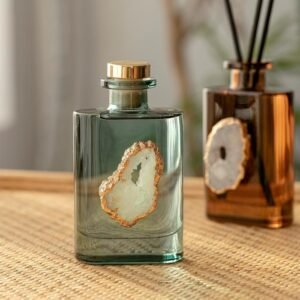
- Material Inertia: High-quality manufacturers use amber or UV-filtered glass to block the primary degradative force: light. The inner coating of caps, seals, and spray mechanisms must be inert (often using specific polymers or metals) to prevent "headspace migration"—where fragrance molecules interact with and absorb into packaging materials, subtly altering the scent in the bottle and on the skin.
- Seal Integrity: Every component is tested for oxygen ingress and volatile loss. A faulty seal will allow top notes (the most volatile molecules) to evaporate, leaving a flattened, unbalanced scent. Fill levels are laser-controlled to minimize the oxygen-rich headspace in the bottle.
05 The Human Element: The Trained Nose as Ultimate Arbiter
Despite all the technology, the final guarantee remains human. The Master Perfumer and Quality Control (QC) "Noses" are the ultimate sensory instruments.
- The Organoleptic Panel: QC teams undergo years of training to calibrate their olfactory sense as a quantitative tool. They perform triangle tests (identifying the odd sample among three) and sequential profiling to detect deviations invisible to machines.
- Continuous Calibration: These experts constantly re-smell the Master Batch and historical batch archives to keep their internal reference flawless. Their "no" overrides any passing analytical data, sending a batch back for investigation.
06 The Unseen Protocol: From Factory to Fragrance Counter
Consistency extends to the supply chain. Manufacturers mandate storage and transport conditions for distributors, often requiring climate-controlled warehouses and prohibiting exposure to direct sunlight or extreme temperatures during shipping. They conduct periodic market surveillance, purchasing their own products from retail shelves around the world to subject them to the same QC tests, ensuring the scent that leaves the factory is the scent the customer experiences.
This end-to-end fortress of control—from the genetics of a rose to the glass of the bottle and the climate of the truck—is how a true perfume manufacturer guards the invisible, priceless asset of a perfectly consistent scent, bottle after bottle, year after year.


 English
  Spanish
  Portuguese
  French
  Russian
  Polish
  Czech
Czech