
You bought a new reed diffuser or mixed your own, only to notice that the liquid isn’t as clear as you expected. Is this cloudiness a sign of product deterioration? Did you receive a defective product? And more importantly—is it still safe to use?
This is an excellent question, and one that many users and DIY enthusiasts encounter. Today, ENO Aroma will help you fully understand this issue from a manufacturer’s perspective.
Conclusion first: Whether cloudy reed diffuser liquid remains safe depends entirely on the cause of the cloudiness. In most cases, it is a physical phenomenon that does not affect safe use. However, in rare instances, it signals chemical deterioration, and you should discontinue use.
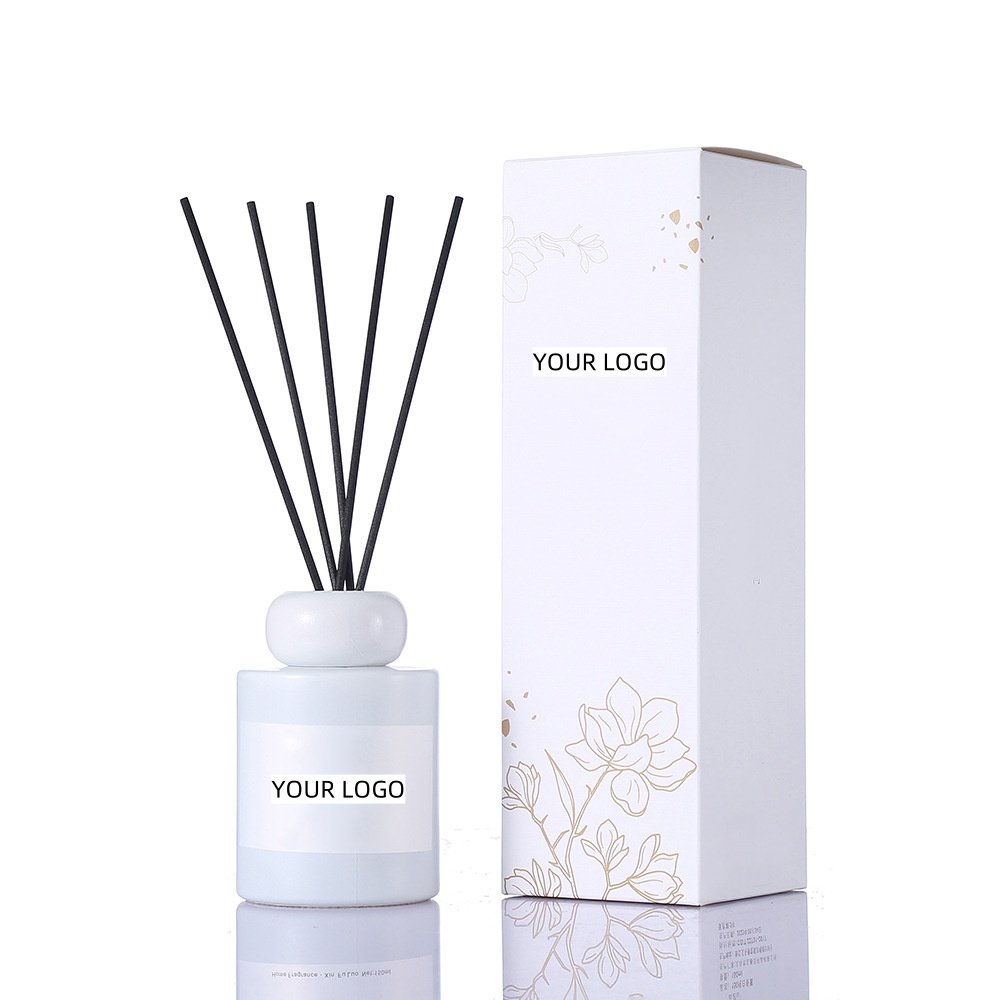
1. The "Innocent" Causes of Cloudiness: Physical Phenomena
In the vast majority of cases, cloudy liquid is not a signal to discard the product. Based on industry experience and formulation science, cloudiness typically results from the following benign physical changes:
1.1. Immiscibility: Solubility Issues
This is the most common cause. The liquid in a reed diffuser is essentially a "solution" or "mixture" based on a solvent et fragrance oils/essential oils.
- Why it becomes cloudy: When the solvent reaches its saturation point for dissolving the fragrance, or when temperature changes reduce solubility, the mixture becomes opaque or separates.
- Typical appearance: You might see tiny floating particles, a milky-white haze, or a cloudy, snow-globe-like appearance. This often means the fragrance concentration is too high for the solvent’s capacity.
- Is it safe? Yes, it is generally safe, but performance may be affected. Like a glass of sugar water that wasn’t stirred properly—very sweet at the bottom, bland at the top. In this state, your reeds might absorb an inconsistent mixture, leading to unstable or weaker scent throw. It won’t produce toxic or harmful fumes. Shaking the bottle or adding a specialized solubilizer can often remedy this.
1.2. Natural Pigments from Raw Materials
- The "Personality" of Natural Oils: If you are using pure natural essential oils, especially citrus oils, or certain floral absolutes, they naturally contain colored pigments.
- Norme industrielle: Many professional brands explicitly state in their product descriptions: "Due to the handmade nature of this diffuser and the use of pure essential oils, the color of the liquid may vary slightly from batch to batch depending on the natural characteristics of the oils. This does not affect quality or fragrance." Sometimes, this natural coloration can be perceived as cloudiness or a slight "flocculent" appearance in the bottle.
- Is it safe? Absolutely safe. This is a natural attribute of plant-based ingredients and can even be considered a mark of quality.
1.3. Environmental Interference
- Temperature Fluctuations: Just as cooking oil can solidify in cold weather, certain molecules in reed diffuser liquid—especially waxy compounds in some fragrances—can change state in lower temperatures. They may transition from a clear liquid to an opaque, "frozen," cloudy, or crystallized appearance.
- Is it safe? Yes, safe. Once the temperature returns to normal, the liquid will typically clear up on its own, and the fragrance quality remains unaffected.
2. The "Dangerous" Signals of Cloudiness: Chemical Deterioration
Although most cases of cloudiness are safe, the following two scenarios indicate risk. It is strongly recommended to discontinue use.
2.1. Severe Separation and Offensive Odors
- What is severe separation? The liquid is no longer a uniform mixture. It has clearly separated into two (or more) distinct layers—perhaps an oily layer on top and a watery layer below—or contains significant sediment.
- Accompanying symptoms: Besides separation, you detect a sharp, unpleasant alcohol smell, a rancid oily or paint-like odor, or a strong chemical solvent smell.
- Diagnosis: This indicates that the fragrance molecule structure has been compromised, and the original scent system has collapsed. This is usually caused by improper storage (e.g.,长时间 exposure to sunlight or high heat) or an inherently low-quality, unstable formulation.
2.2. Contamination from External Sources
- Ce qu'il faut rechercher: The reeds are heavily caked with dust, or someone has spilled food, liquid, or other substances near or into the diffuser.
- Diagnosis: You notice the cloudiness is concentrated primarily around the bottle opening or the points where the reeds are inserted, accompanied by visible debris, fuzz, or mold spots.
- Warning: This suggests that bacteria, mold, or other contaminants have invaded the liquid. Using this diffuser could circulate more than just scent; it could release microbial particles into the air, which is particularly unfavorable for sensitive individuals (such as children or the elderly) with respiratory conditions.

3. Manufacturer’s Safety Checklist
When faced with a cloudy reed diffuser, follow these steps to assess and address the situation:
| What You Observe | Possible Cause | Action Guide (Safety Check) |
|---|---|---|
| Cloudiness ONLY (No off-odor) | Solubility issue, natural pigments, low-temperature effect | Safe to continue using, though scent throw may be slightly weaker. To improve performance: 1. Shake the bottle to temporarily recombine the mixture. 2. Flip the reeds to refresh the diffusion surface and boost scent. 3. Monitor closely. If the liquid separates again quickly after shaking, or if the scent remains weak, consider replacing the reeds or the entire diffuser refill. |
| Cloudiness + Off-odor | Solvent system breakdown; oil rancidity | Discontinue use immediately. The liquid has likely chemically deteriorated. Dispose of the liquid as chemical waste; do not pour it down the sink, as this can harm the environment. |
| Cloudiness + Sediment/Mold | Physical contamination; microbial growth | Discontinue use immediately. For the sake of your family’s respiratory health, discarding this diffuser is the best and safest choice. |
Conclusion
In most instances, cloudy reed diffuser liquid is a physical phenomenon caused by solubility limits or the natural characteristics of essential oils. This is generally safe to use, though it might slightly affect scent diffusion performance.
However, once cloudiness is accompanied by offensive odors, severe separation, ou visible impurities/mold, this is a "red alert" indicating product deterioration.
Now you can confidently assess the diffuser in your own home.
Worried about fragrance solubility and stability? ENO Aroma offers robust, stable formulation systems, ensuring crystal-clear liquid and consistently long-lasting scent diffusion. Contact us to learn more about our OEM/ODM capabilities.





 French
  English
  Spanish
  Portuguese
  Russian
  Polish
  Czech
Czech