
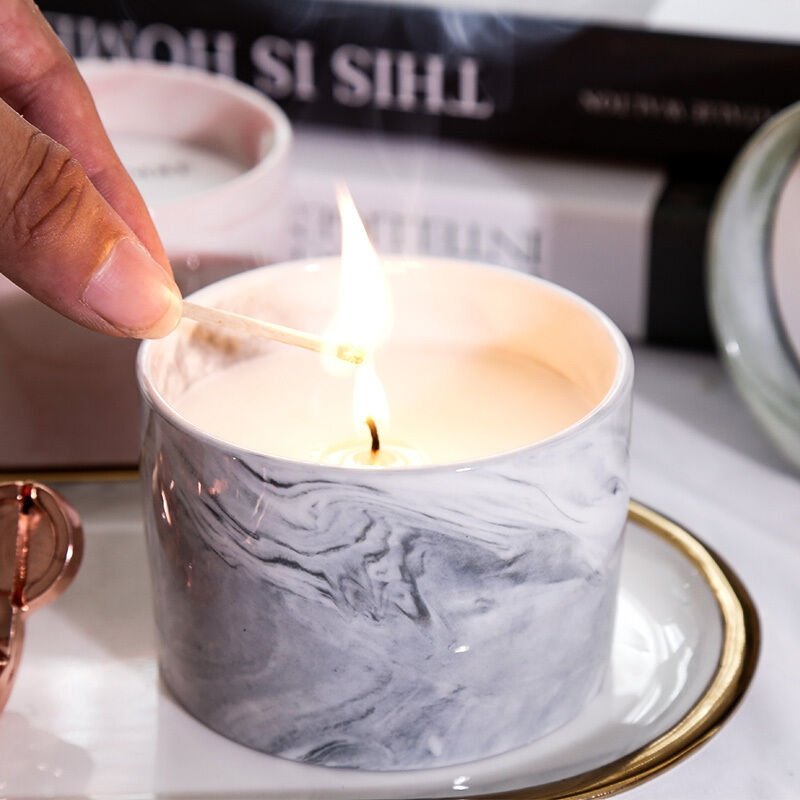
Have you ever eagerly lit a new scented candle, hoping to be embraced by a gentle fragrance, only to be met with a sharp, irritating, almost chemical-like odor that even makes you feel dizzy?
This "harsh" experience not only ruins the ambiance but is also a classic hallmark of low-quality synthetic fragrances found in many inferior candles.
At ENO Aroma, we are committed to using high-quality raw materials that meet international safety standards. Today, we’ll analyze the root causes of harsh-smelling candles and identify the two types of problematic synthetic fragrances you must avoid.
1. Why Are Some Fragrances "Harsh"? The "Violent Invasion" of Chemical Molecules
First, we need to understand how scent is perceived. Natural fragrance materials (such as lavender or citrus essential oils) typically contain hundreds of different aromatic molecules. They work together like a well-coordinated orchestra, with high, middle, and low notes intertwining harmoniously to produce a rounded, soft, and beautifully layered "symphony."
However, the formulation logic of cheap synthetic fragrances is completely different.
To minimize costs and mimic a specific scent (like "rose" or "ocean"), a perfumer might use only a handful of very inexpensive, single-note chemical molecules to forcefully patch together a fragrance. These molecules have simple chemical structures and are highly volatile. When heated, they race toward your nasal cavity like out-of-control race cars, without any subtlety or refinement.
This high-concentration, low-complexity chemical signal is difficult for the brain to process comfortably, resulting in perceptions of "harshness," "sharpness," or a "chemical" smell.
2. Buyer’s Guide: Watch Out for These 2 Types of Problematic Fragrances
Based on our years of manufacturing experience, the following two types of synthetic fragrances are the primary causes of harsh candle smells and poor user experiences.
Type 1: Low-Cost "Cupcake" & "Designer Perfume Copycat" Fragrances
These fragrances are typically designed to mimic specific gourmand desserts or popular commercial perfumes.
- Origin & Composition: To achieve an extreme level of "sweetness" or "scent intensity," these formulas often use large amounts of powerful solvents and fixatives like Benzyl Benzoate или Фталаты. It is important to note that phthalates are strictly regulated or banned in many countries and regions due to potential health risks.
- Olfactory Performance:
- Fake "Intensity": When first lit, the smell is extremely strong, cloyingly sweet, and lacks any layering. This is often because cheap solvents are already evaporating heavily at room temperature, creating an illusion of being "potent."
- Burnt, Unpleasant Notes: As the candle burns and the wax pool heats up, these low-cost solvents cannot withstand the temperature. Their molecular structures break down, releasing burnt plastic or scorched sugar odors that mix with the intended fragrance, creating a strange, unpleasant smell.
Type 2: Forced Replications of Conceptual Scents like "Ocean" or "Ozone"
Some scents cannot be obtained naturally from plants through distillation or pressing—for example, "sea breeze," "after the rain," or "fresh linen."
- Origin & Composition: To "recreate" these non-existent-in-nature scents, chemists must synthesize specific molecules in a laboratory.
- Olfactory Performance:
- Sharp "Chemical" Smell: If the formula is unbalanced, these purely synthetic molecules stand out sharply. For instance, some "ocean" scented candles don’t smell like a fresh sea breeze but rather like detergent or disinfectant. Calone, a synthetic molecule commonly used to create marine/ozone notes, can produce an overly sharp "metallic" or "overripe melon" odor if overused.
- Rapid Olfactory Fatigue: These molecules typically evaporate very quickly and easily fatigue the nose. You might perceive a very "strong" smell when first lighting the candle, but within thirty minutes, you could smell almost nothing. This isn’t because the scent has faded, but because your olfactory receptors have been overstimulated to the point of temporary "burnout."
3. Professional Manufacturer’s Advice: How to Choose a Good Candle
Whether you are a B2B buyer or a discerning consumer, you can avoid low-quality products by following these guidelines:
Check the Ingredient Label: While regulations don’t always require listing all fragrance components, responsible brands will clearly indicate the use of fragrance oils and often state "Phthalate-Free." Be wary of products that vaguely label ingredients as "fragrance" or "parfum" without further clarification.
Choose High-Quality Wax Bases: High-quality fragrances need high-quality carriers. Natural waxes like soy wax and coconut wax, with their lower melting points and stable structures, release fragrance more gently and evenly, preventing the wax pool from overheating and causing the fragrance to burn and smell off.
Trust Your Nose: If a candle smells intensely sweet or overwhelmingly strong even through its packaging while unlit, that’s often a sign of excessive cheap solvent evaporation. A quality scented candle should have an elegant, understated, and pleasant aroma even when cold.
Заключение
A candle’s fragrance is ultimately an art form of molecules.
Cheap synthetic fragrances, resulting from crude molecular mixtures and unbalanced formulations, often produce aggressive "noise" rather than harmonious music. At ENO Aroma, we believe that truly pleasant fragrances work subtly and gently. They don’t harshly announce their presence, but rather surround you softly, allowing you to experience a sense of peace and well-being without conscious effort.
Choosing the right scent is choosing a lifestyle.
Interested in learning more about the manufacturing standards for high-quality scented candles? Please contact ENO Aroma for a professional consultation.



 Russian
  English
  Spanish
  Portuguese
  French
  Polish
  Czech
Czech